Free Delivery Free Delivery on all orders!

Rated Excellent by Customers on Google

Products 150,000+ Curated Products

How to Choose the Right Garden Parasol or Umbrella

Whether you are shading a dining area, a lounge space or a small patio corner, a well-chosen parasol or garden umbrella can make outdoor living far more comfortable and enjoyable. The right shade not only protects you and your guests from strong sun but also helps keep cushions, fabrics and seating cooler and looking better for longer.

Garden parasols come in a range of styles and sizes, from classic centre-pole designs for compact spaces to adjustable cantilever models that create shade without interrupting the seating layout. Choosing the right type, size, base and position for your space ensures you get the most from your seating area and helps it feel inviting throughout the season.

This guide explains the key things to consider when selecting a parasol or umbrella for your garden, including how to match it with your outdoor seating and keep it secure and durable through changing weather.

Start with how you use your garden

Start with how you use your garden

Before choosing a parasol, think about where and how you spend time outside. The type of seating you have and the way you use your garden will naturally guide the style and size of shade you need.

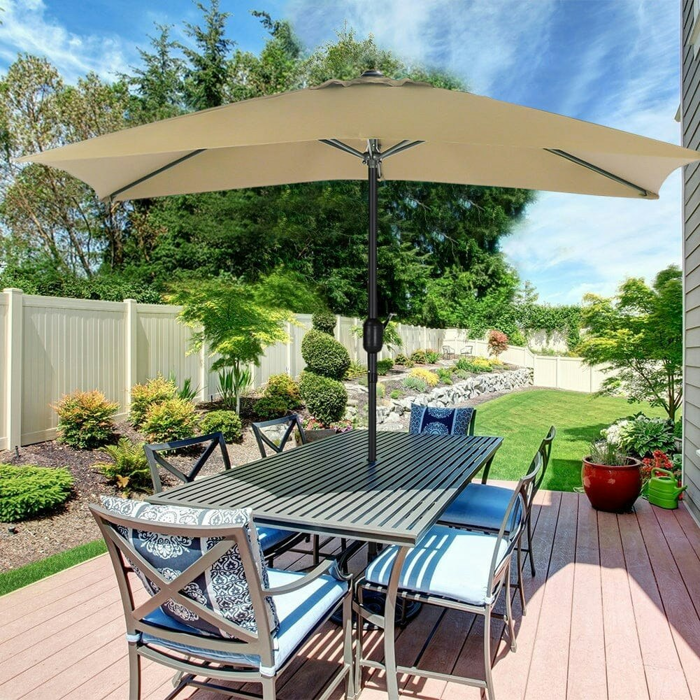
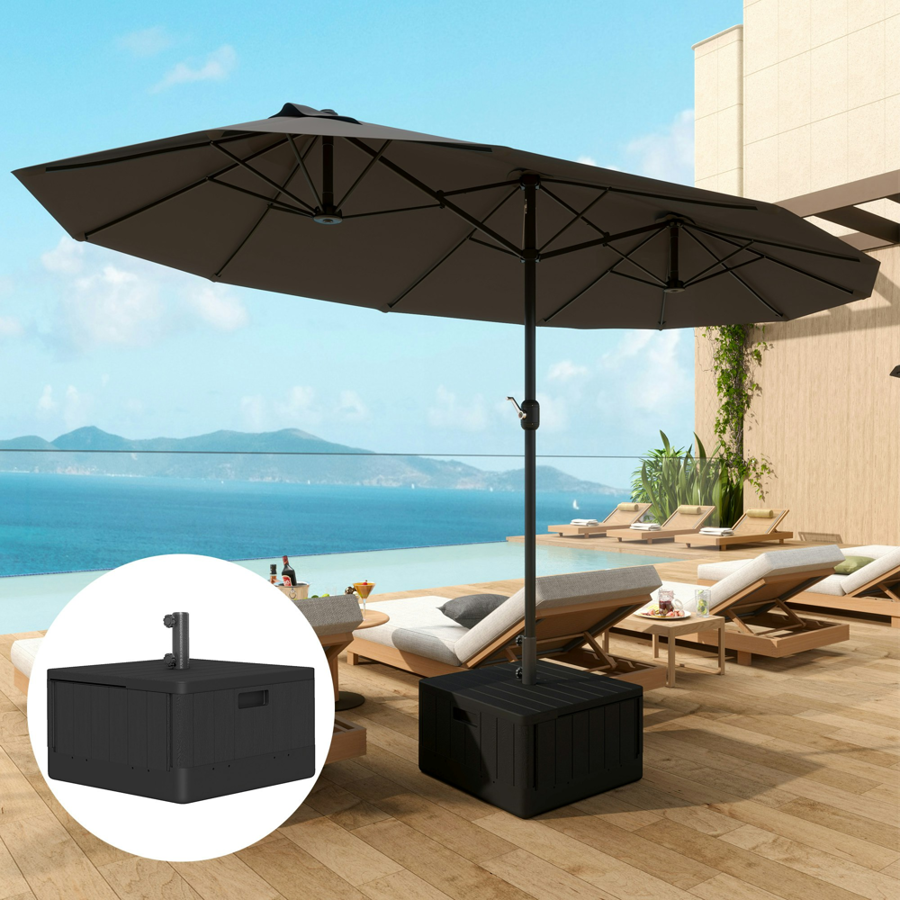
If your outdoor space is mainly used for dining, a parasol positioned over the centre of a table creates even coverage for everyone seated. Traditional centre-pole designs work well when your table has a built-in hole, while larger freestanding or cantilever styles can provide wider coverage for bigger patio sets.

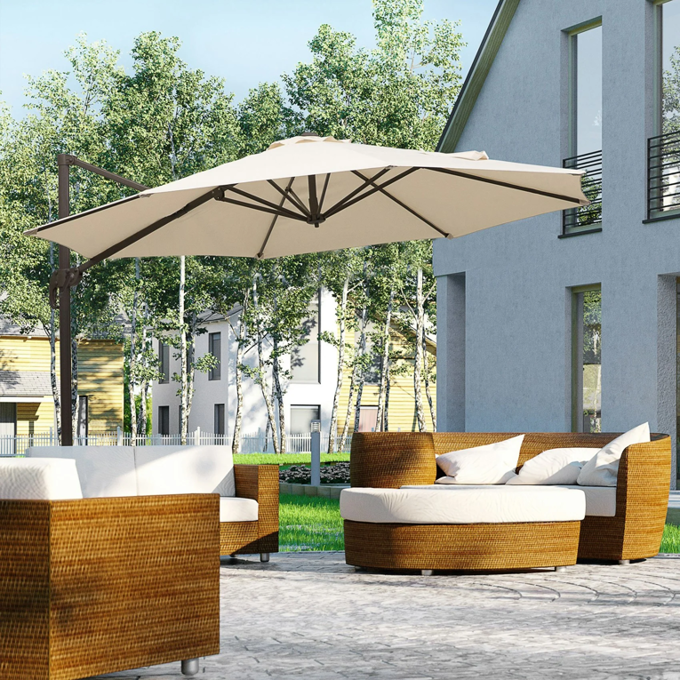
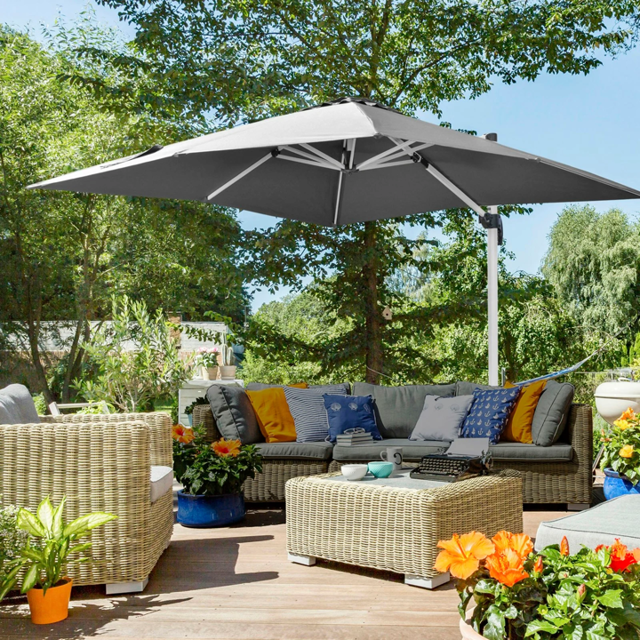
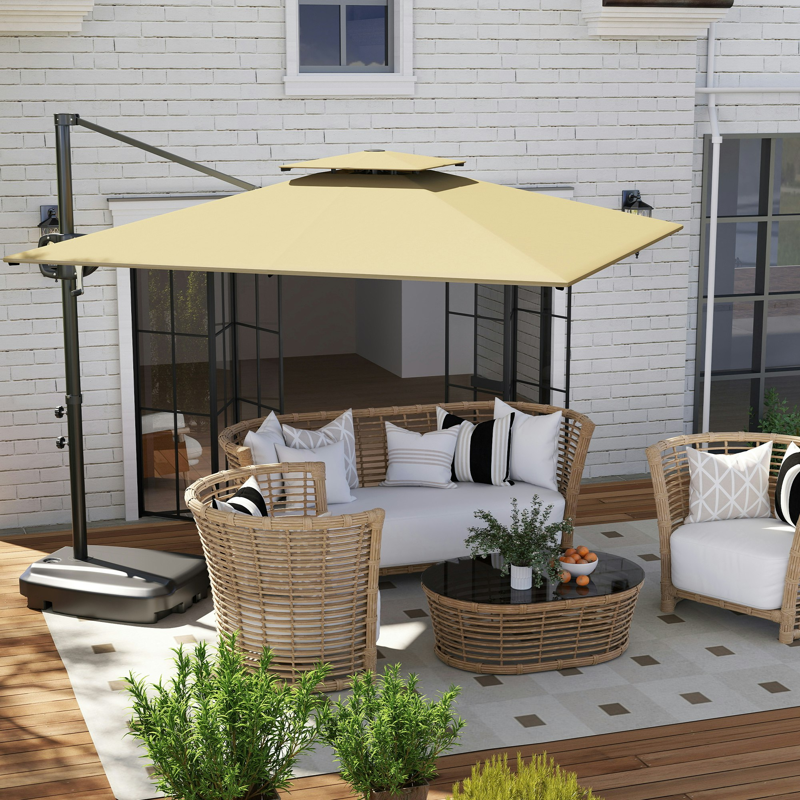
For lounge seating and sofa areas, flexibility becomes more important. Cantilever parasols are often better suited here, as the offset pole keeps the space underneath clear and allows you to position shade exactly where it is needed without interrupting the seating layout. This works particularly well with corner sofas or modular arrangements.

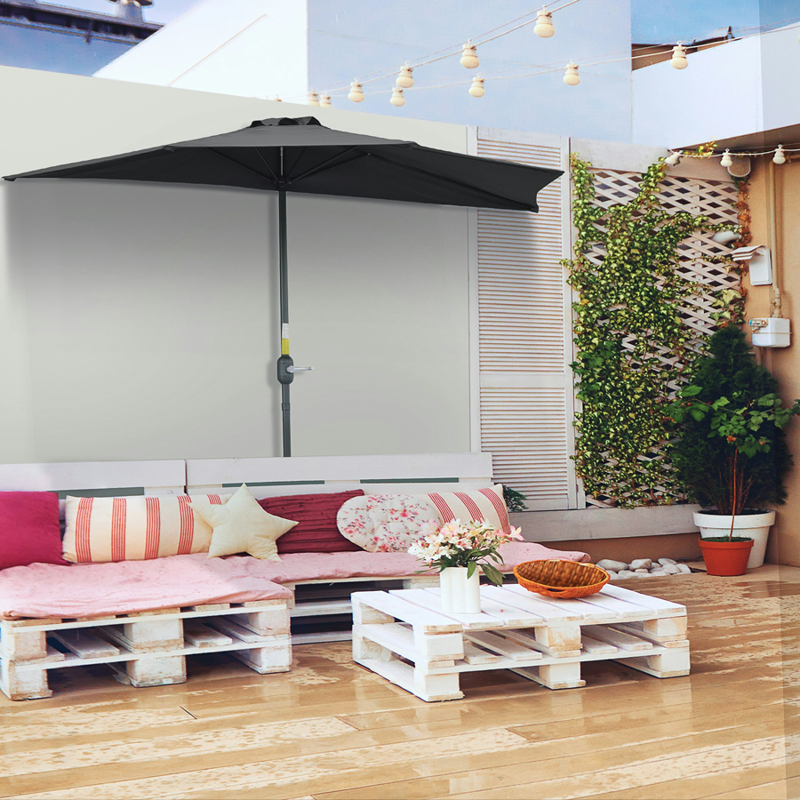
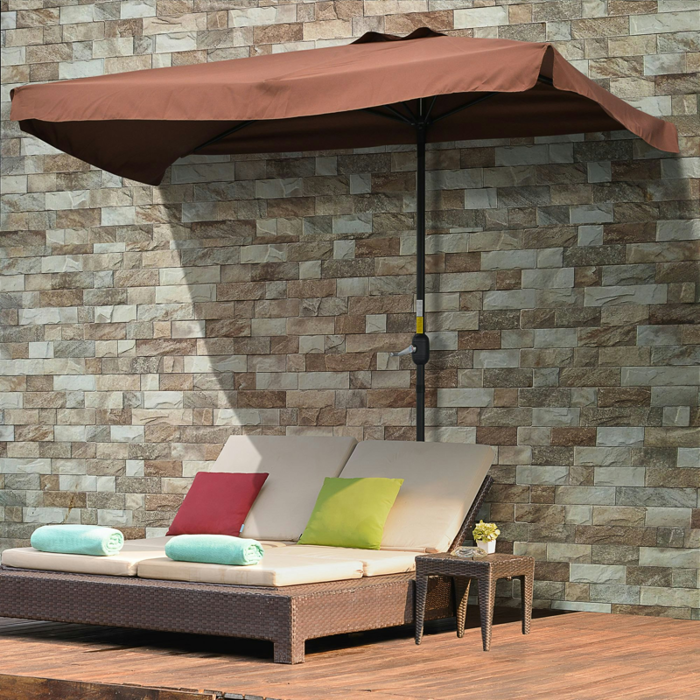
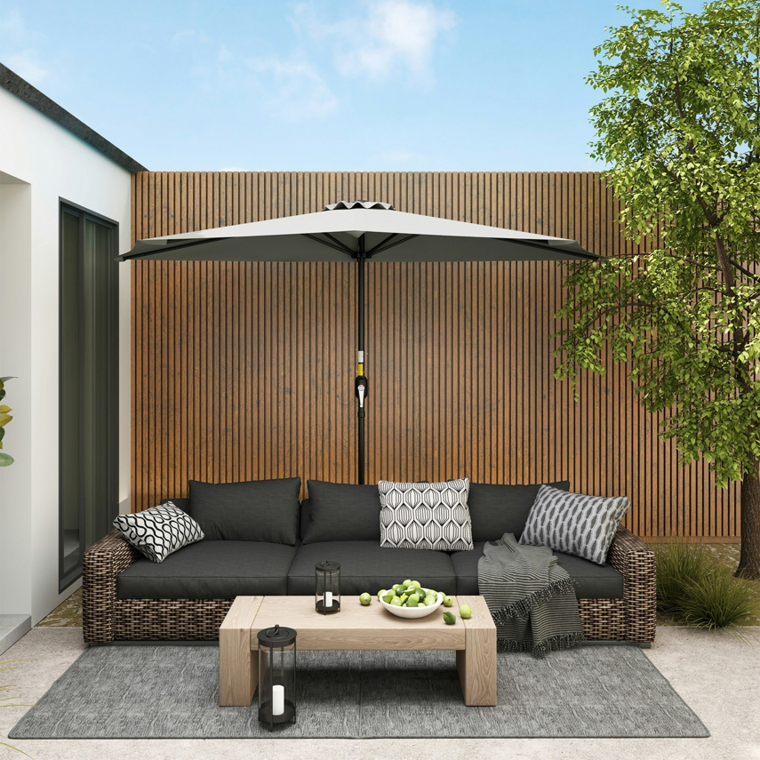
If you have a small patio, balcony or seating area against a wall, space may be limited. In these situations, half parasols are designed to sit flush against a wall or boundary, giving you useful shade without taking up unnecessary room.

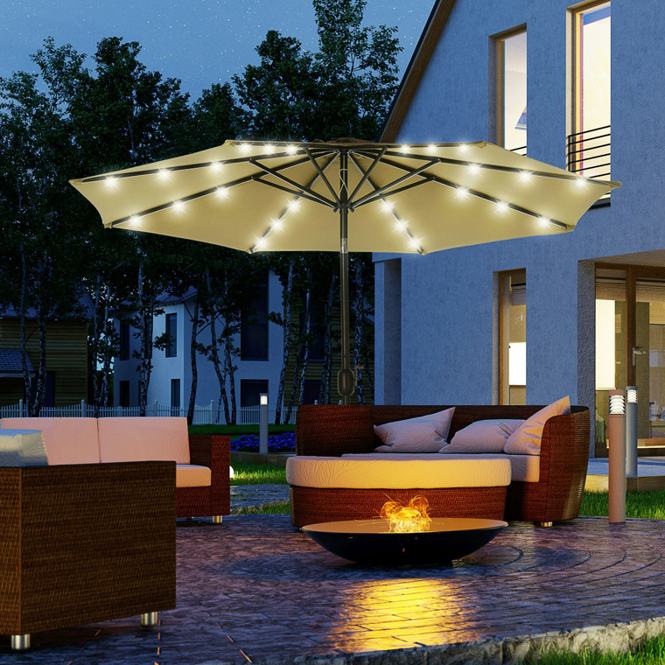
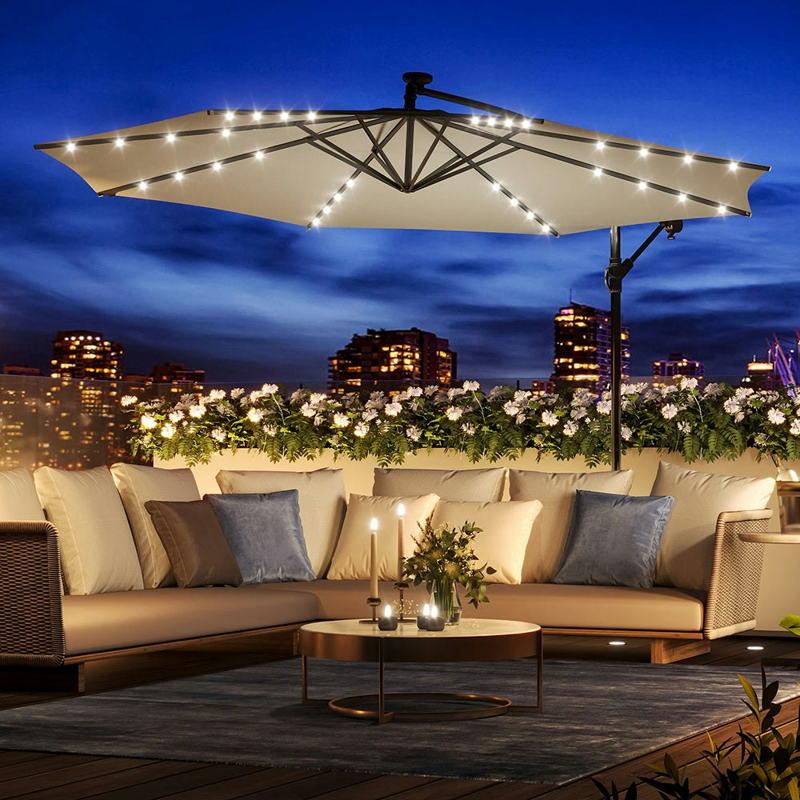
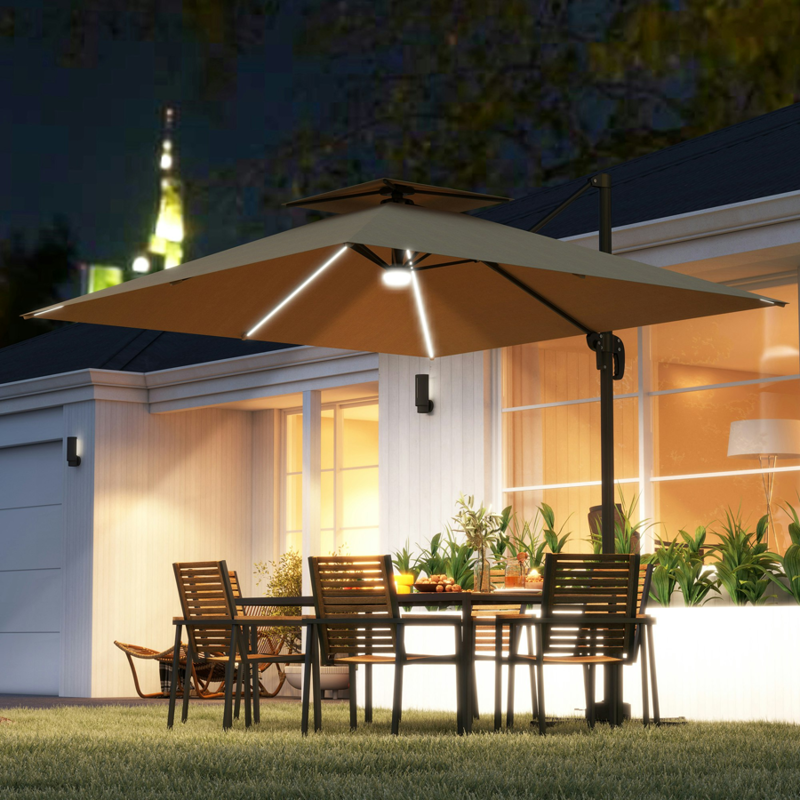
For gardens that are used into the evening, LED parasols combine practical shade during the day with built-in lighting after sunset, making them a strong option where you want both comfort and atmosphere from the same piece.

By matching the parasol to how your outdoor space is used, you avoid oversizing or undersizing your shade and ensure it complements your seating rather than competing with it.

Understanding the main types of parasol

Garden parasols are not all the same. The structure, pole position and opening mechanism all affect how they perform in different outdoor layouts. Choosing the right type ensures your shade works with your seating rather than getting in the way.

Centre-pole parasols

Centre-pole parasols

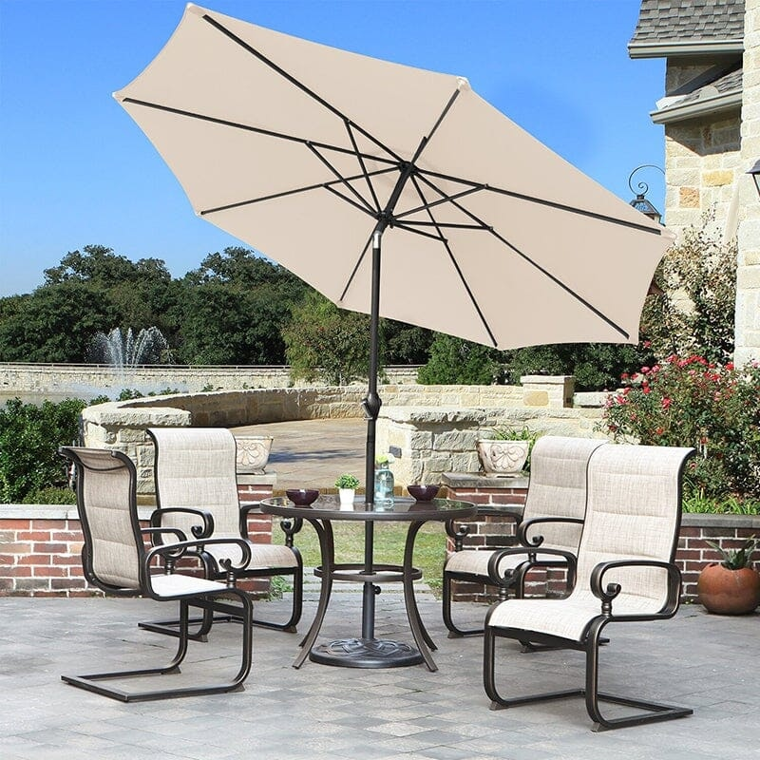
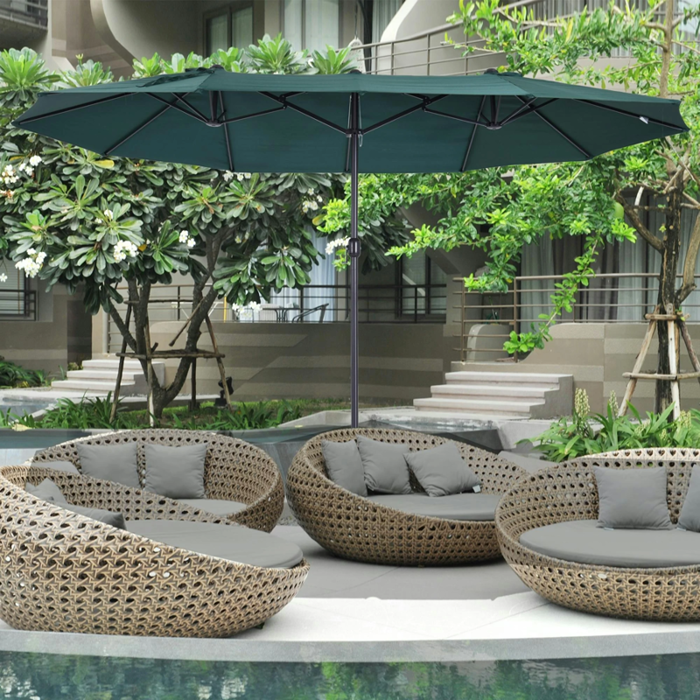
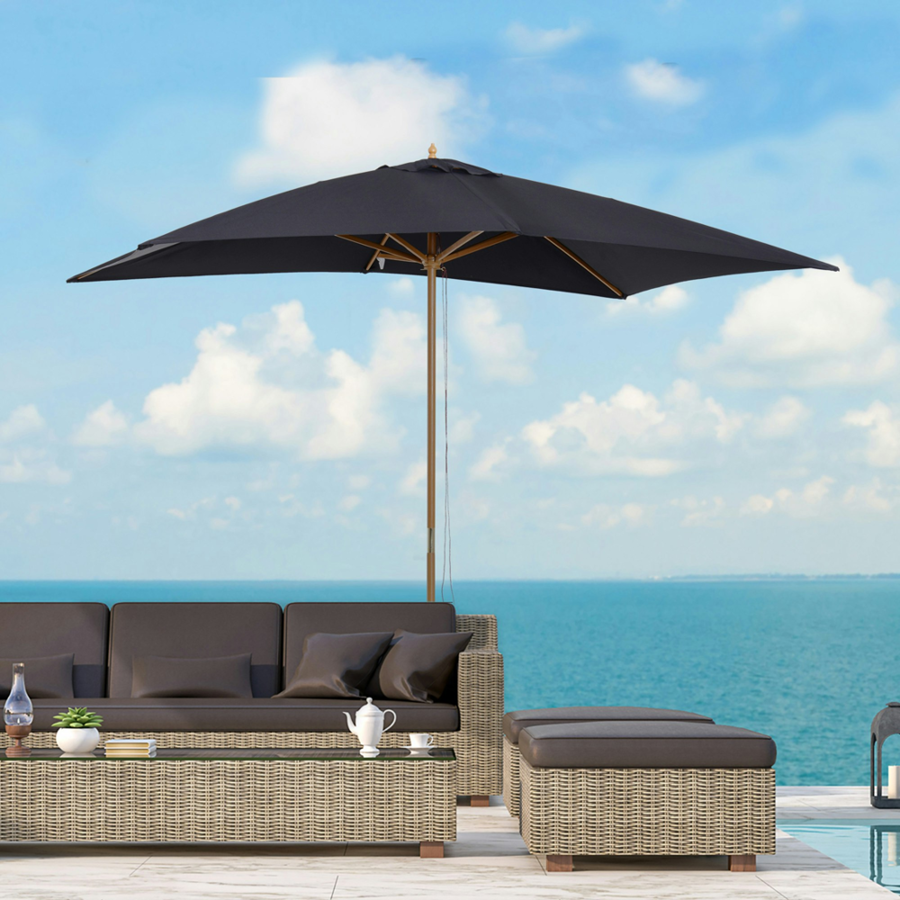
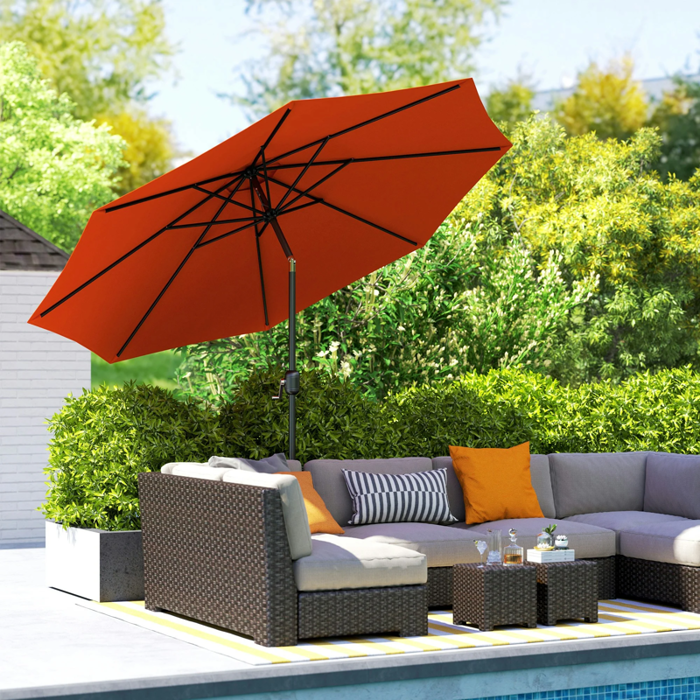
Centre-pole parasols are the traditional design, with a straight pole running through the middle of the canopy. They are ideal for dining tables with a central hole and suit compact seating areas where space is limited. This style is often the most straightforward option for patios and smaller gardens.

Because the pole sits centrally, weight distribution is balanced and stability is generally easier to manage with the correct base. Most centre-pole parasols use a crank or push-up mechanism, making them simple to open and close as needed. They work best where shade needs are predictable and central, such as directly over a four- or six-seat dining table.

If your layout is symmetrical and your table is the focal point of the space, a centre-pole parasol offers a clean, classic solution that feels proportionate and practical.

Cantilever parasols

Cantilever parasols

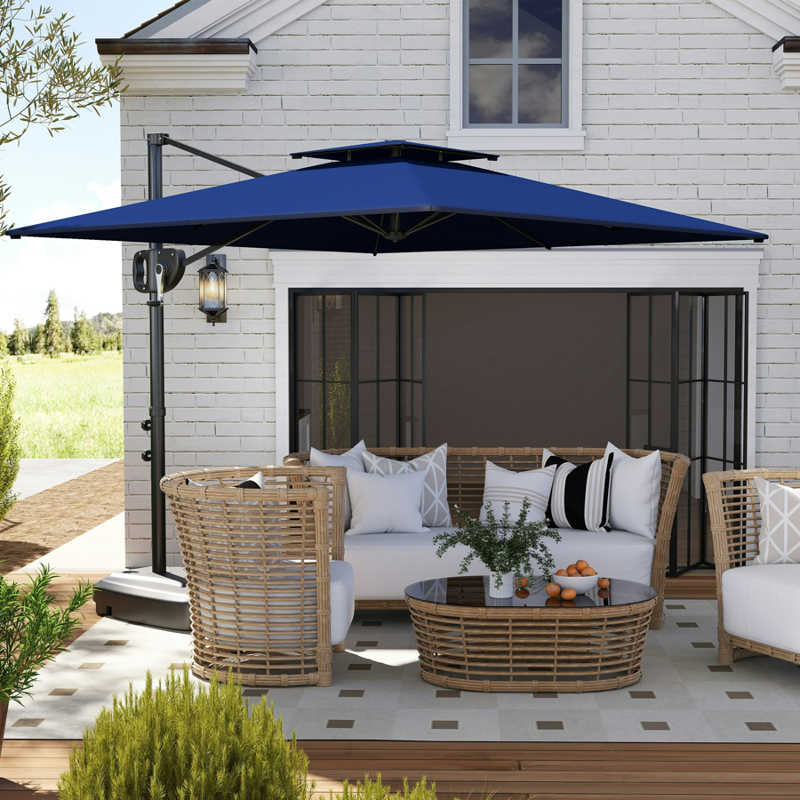
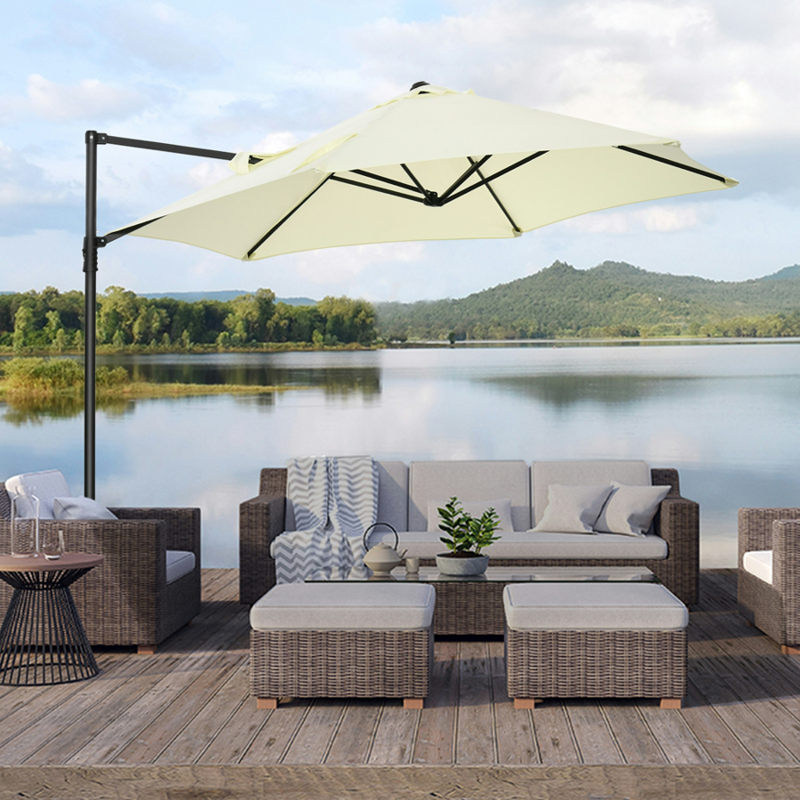
Cantilever parasols have an offset pole and a suspended canopy, leaving the space underneath completely clear. This makes them particularly well suited to lounge seating, corner sofas and larger dining areas where a central pole would be intrusive.

Because the canopy can usually be rotated, angled or tilted, they provide far greater flexibility throughout the day as the sun moves. You can adjust the shade without moving your furniture, which is especially useful in open gardens with full sun exposure.

They are a popular choice for modern garden layouts and larger patio spaces, where uninterrupted floor space and visual flow are important. With the right weighted base, cantilever parasols offer both coverage and a more architectural presence in the garden.

Banana parasols

Banana parasols

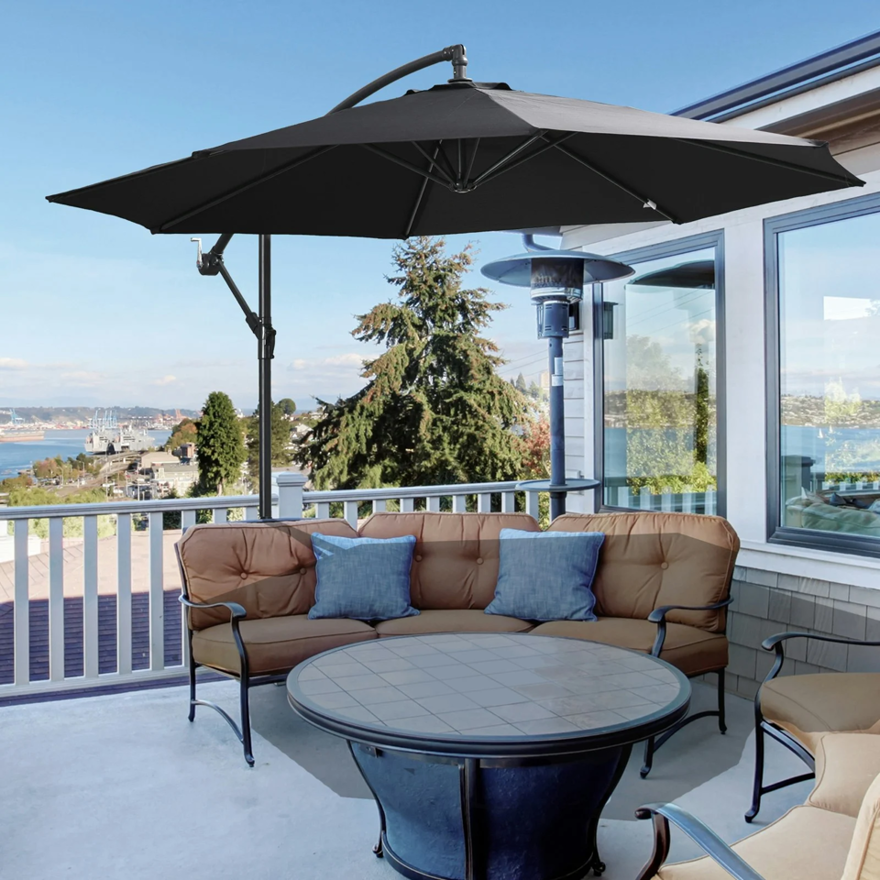
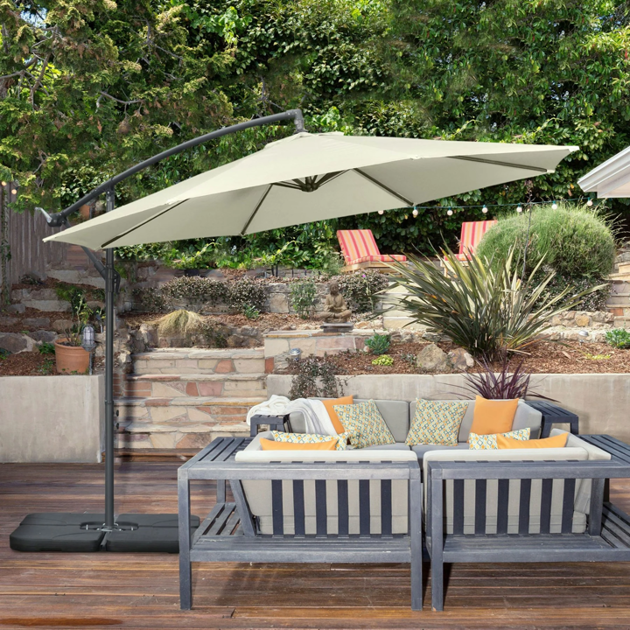
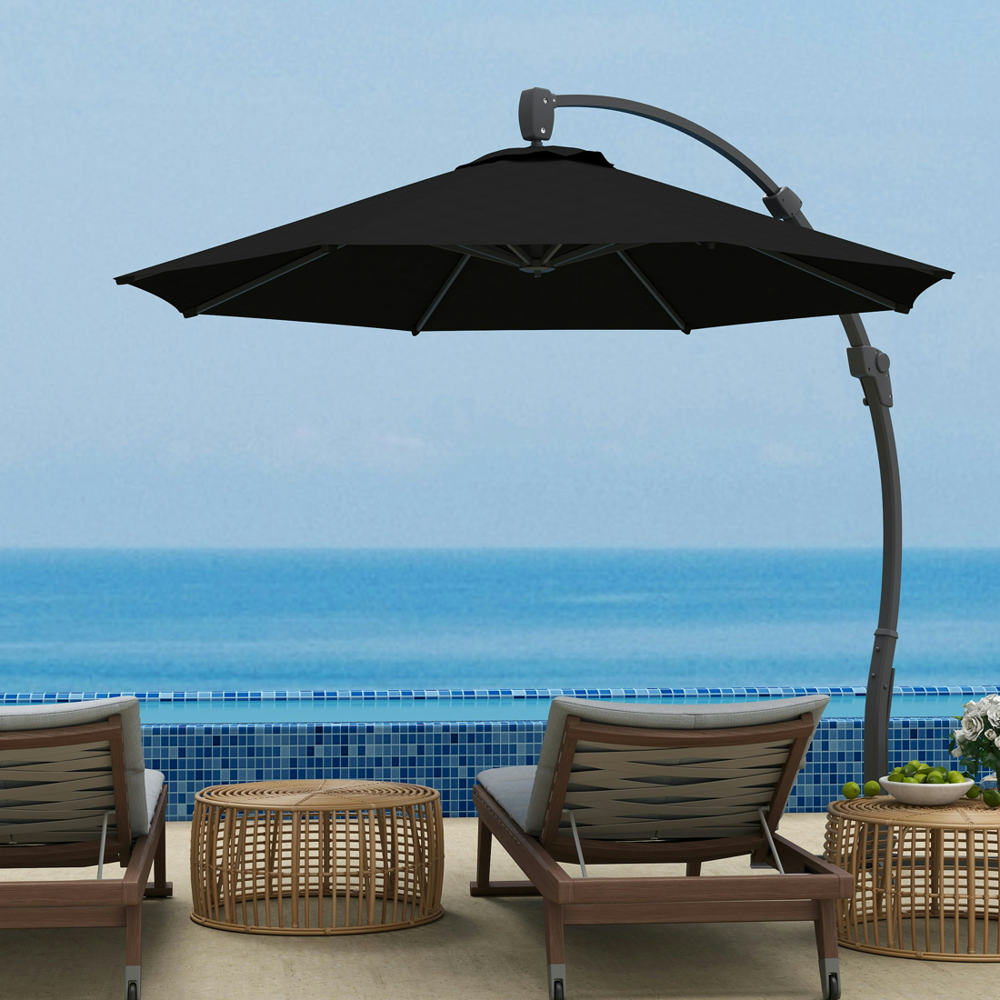
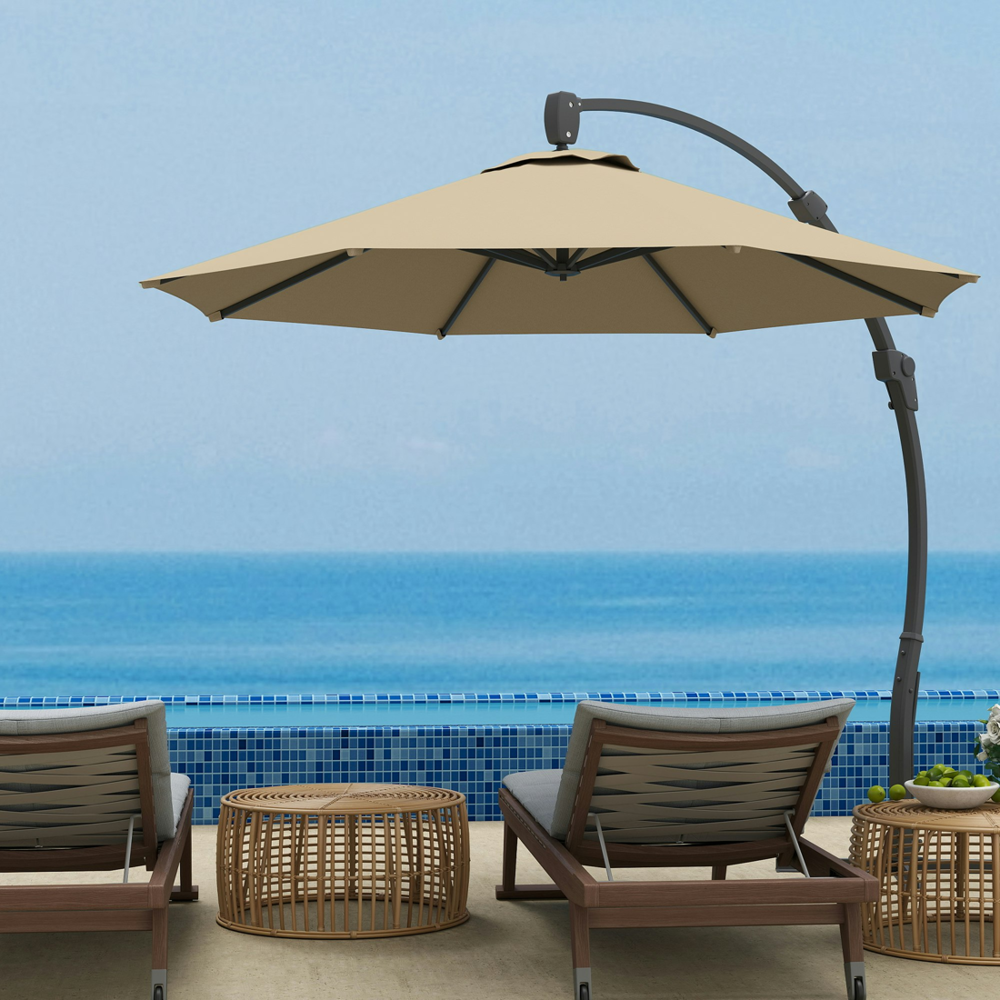
Banana parasols are a variation of the cantilever design, featuring a curved arm that supports the canopy. They offer the same benefit of unobstructed space underneath but with a softer, more contemporary silhouette.

The curved frame allows the canopy to extend smoothly over rectangular or elongated seating areas, making this style particularly effective for longer dining tables or modular sofa sets. The shape often feels more sculptural, which suits contemporary patios and landscaped gardens.

If you want flexible coverage with a slightly more distinctive profile than a standard cantilever, banana parasols strike a strong balance between practicality and design.

LED parasols

LED parasols

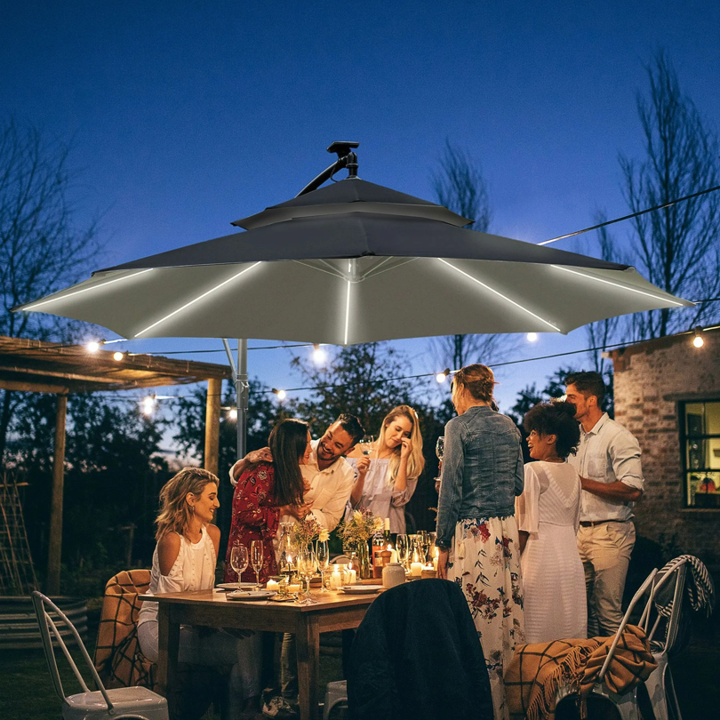
LED parasols combine daytime shade with integrated lighting for evening use. Built-in LED strips or spotlights within the ribs or canopy provide gentle illumination, allowing you to continue using your seating area after sunset without additional lighting.

They are especially effective over dining tables or lounge areas where atmosphere matters just as much as functionality. Soft lighting can extend outdoor meals and conversations well into the evening, reducing the need for separate floor or wall lights.

For gardens that are regularly used after dark, an LED parasol creates a more cohesive setup, blending shade and ambience in one structure.

Half parasols

Half parasols

Half parasols are designed to sit flat against a wall or fence, making them ideal for balconies, narrow patios or gardens where furniture is positioned against a boundary. Their straight edge allows them to maximise usable shade without projecting unnecessarily into walkways or tight spaces.

They are particularly useful in urban gardens or courtyard settings where space is at a premium and every metre matters. Despite their compact design, they can still provide effective coverage for small dining tables or bistro sets.

For compact outdoor areas, half parasols are often the most practical and space-efficient solution.

Wall-mounted parasols

Wall-mounted parasols

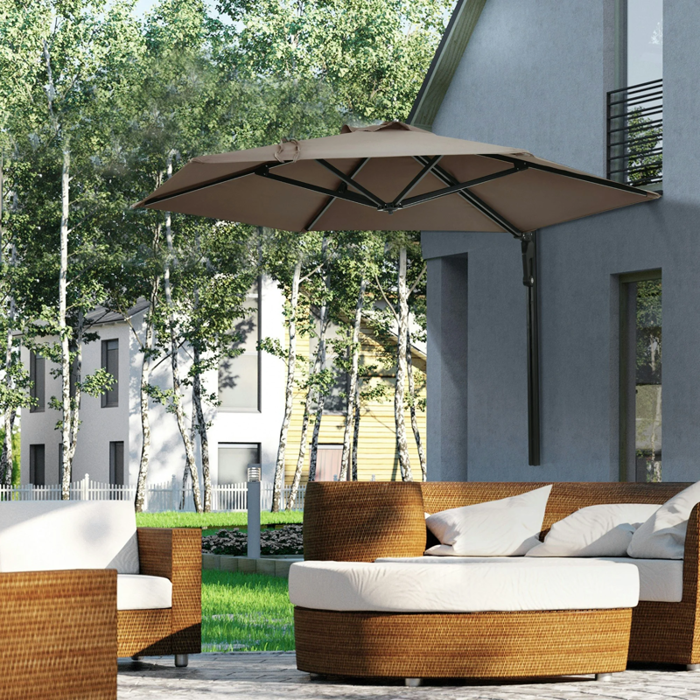
Wall-mounted parasols are fixed directly to a wall or solid surface rather than supported by a freestanding pole and base. They are ideal for balconies, compact patios or seating areas positioned close to the house where floor space is limited.

Because there is no base on the ground, they free up valuable space underneath the canopy, making them particularly useful in narrow outdoor areas. Many designs allow the canopy to fold away neatly when not in use, keeping the area open and uncluttered.

Wall-mounted parasols are best suited to sheltered spaces and are a practical solution when a freestanding parasol would feel intrusive or take up too much room.

Expert tip: Choose structure before style

It is easy to focus on colour or fabric first, but the structure of the parasol determines how well it will work with your seating. Once you have the right type, you can then choose the finish and design that suits your garden.

Choosing the Right Size

Choosing the Right Size

Selecting the correct size parasol is just as important as choosing the right style. Too small and it won’t provide meaningful shade. Too large and it can overpower your seating area or feel unstable in windy conditions. The goal is balanced coverage that protects the seating zone without overwhelming the space.

Match the canopy to your seating area

Start by measuring the area you want to shade rather than the overall patio. Think about how many people you typically seat and how much coverage is needed when chairs are pulled out.

As a general guide:

  • A 2–2.5 metre parasol works well for small bistro sets or compact seating areas
  • A 2.7–3 metre parasol suits most four- to six-seat dining tables
  • Larger 3 metre plus canopies are better for bigger dining sets, lounge seating or modular sofas

For rectangular layouts, especially long dining tables or corner sofas, a larger round canopy or an extended cantilever or banana parasol may provide more practical coverage than a smaller central design.

Allow space around the edges

Allow space around the edges

Shade needs to extend beyond just the centre of the table. When chairs are pulled out or when people lean back, the canopy should still provide coverage. Ideally, the parasol should extend slightly beyond the edge of the seating area to account for movement.

At the same time, make sure there is enough clearance around the parasol for safe movement, particularly in smaller gardens or walkways.

Consider height and clearance

Check the height of the canopy once open. It should provide adequate headroom while still casting effective shade. Tilting mechanisms can help adjust coverage without lowering the overall height.

In tighter spaces, especially balconies or areas near doors, ensure the canopy does not obstruct access when opened.

Expert Tip: Think About Sun Movement

The sun shifts significantly throughout the day. A slightly larger canopy or a tilting design can provide more consistent coverage without requiring you to constantly reposition your seating. In open, south-facing gardens, flexibility often matters more than pure diameter.

Bases and Stability

A parasol is only as secure as the base supporting it. Choosing the correct base is essential for safety, durability and long-term performance, particularly in the UK where weather conditions can change quickly.

Different parasol styles require different types of support, and the weight of the base should always be matched to the size and structure of the canopy.

Centre-pole parasol bases

Centre-pole parasol bases

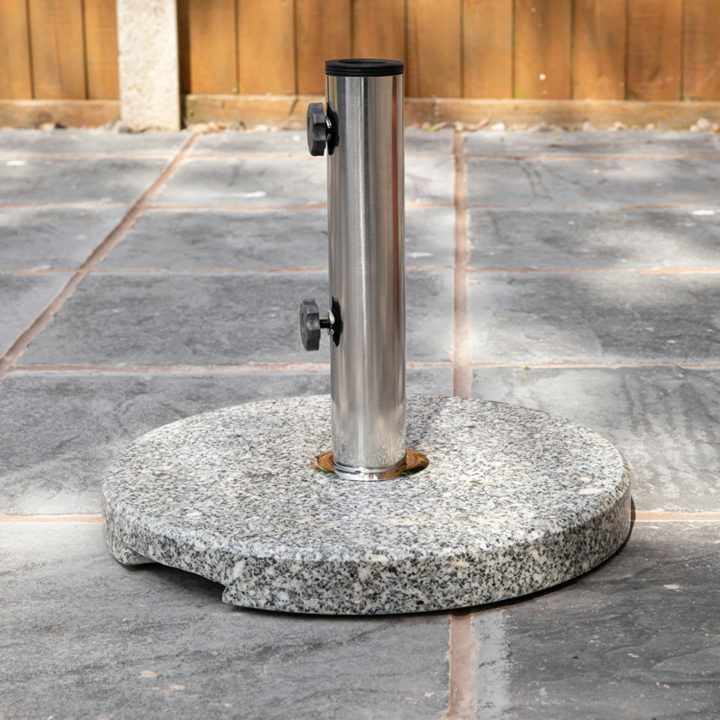
Traditional centre-pole parasols typically require a weighted base that clamps around the pole. The heavier the canopy, the heavier the base should be.

As a general guide:

  • Smaller parasols (up to 2.5m) often require bases of 15–25kg
  • Larger parasols (2.7m–3m and above) may need 25–40kg or more

If your parasol sits through a dining table, the table adds some stability, but a properly weighted base is still essential.

Cantilever and banana parasol bases

Cantilever and banana parasol bases

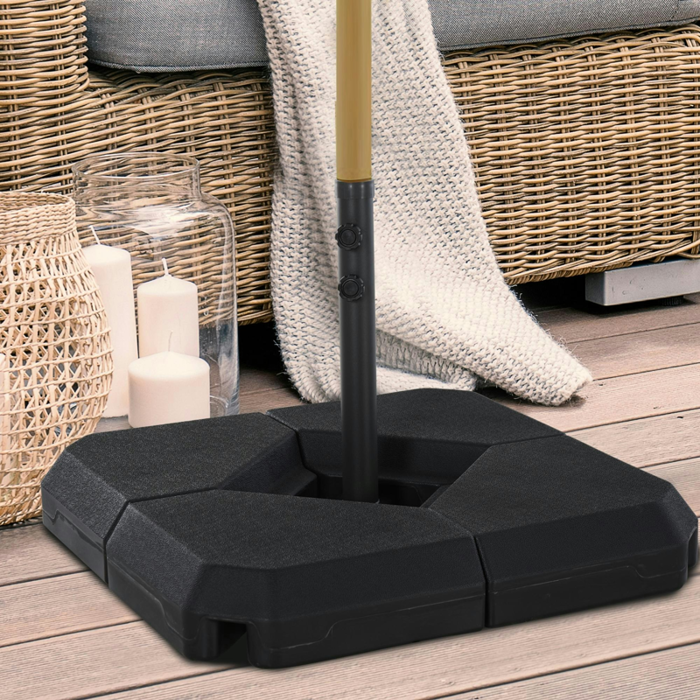
Cantilever and banana parasols require a different support system, usually a cross-base that sits underneath the offset pole. These bases are typically designed to hold fillable weights or heavy slabs.

Because the canopy extends away from the central support, wind resistance is higher. For this reason, correct weighting is particularly important. Always follow the manufacturer’s guidance on required base weight.

In exposed gardens, extra weight and careful positioning can significantly improve stability.

Fillable and slab bases

Fillable and slab bases

Some bases are designed to be filled with water or sand, while others use concrete or stone slabs. Water-filled bases are easier to move when empty, but sand generally provides more consistent weight. Slab systems offer strong stability but require a permanent or semi-permanent setup.

Choosing the right type depends on whether you want flexibility or long-term positioning.

Accessories and protection

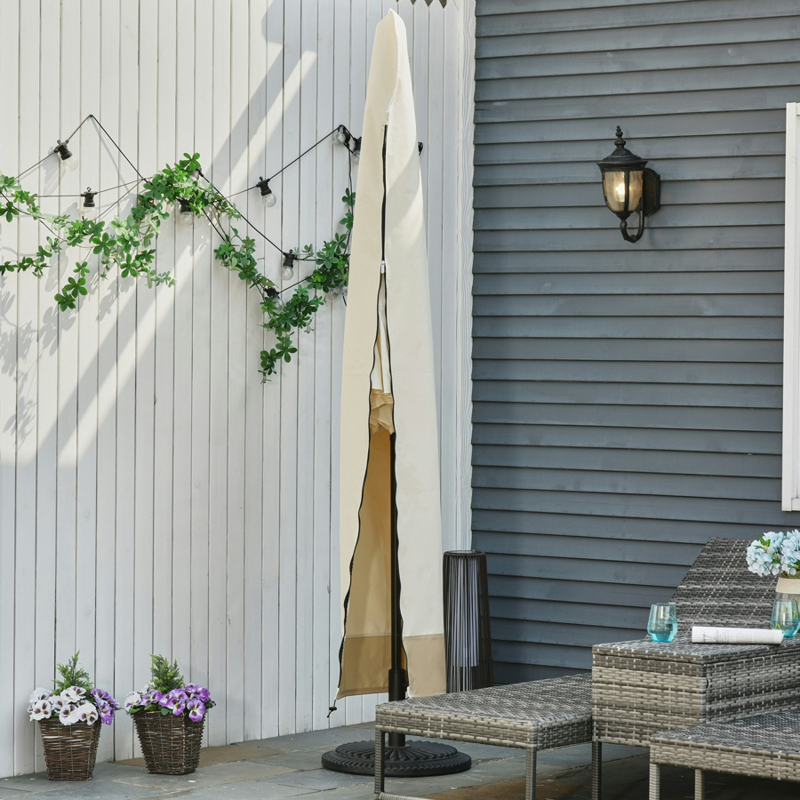
In addition to bases, protective covers help maintain the parasol when not in use. A well-fitted cover protects fabric from UV exposure, moisture and debris, extending the life of the canopy and mechanism.

Expert Tip: Close It When Not in Use

Even a well-weighted parasol should be closed in strong winds or when unattended. Sudden gusts can place significant strain on the frame and base. Closing the canopy when not in use is one of the simplest ways to protect both the structure and surrounding furniture.

Materials and Durability

The frame and canopy fabric determine how well your parasol will perform over time. While most designs may look similar at first glance, differences in materials affect stability, resistance to weather and overall lifespan.

Understanding what your parasol is made from helps you choose a model suited to how often it will be used and how exposed your garden is to the elements.

Frame materials

Frame materials

Most modern parasols use aluminium or steel frames.

Aluminium frames are lightweight, rust-resistant and easy to move. They are a strong choice for gardens where flexibility is important or where the parasol may need to be repositioned during the season. Aluminium also performs well in damp conditions, making it suitable for year-round outdoor use when properly maintained.

Steel frames tend to be heavier and can feel more substantial, offering a solid, stable structure when correctly supported by a suitable base. They are often used in centre-pole and more traditional parasol designs.

However, steel should always be powder-coated or treated to reduce the risk of rust. In sheltered gardens, steel performs very well, but in consistently damp or coastal environments it may require a little more attention to prevent surface wear over time.

For those who prefer a weightier feel and a slightly more classic structure, steel can be a dependable choice.

Wooden parasol frames

Wooden parasol frames offer a natural, traditional aesthetic that pairs beautifully with timber garden furniture and classic patio layouts. Hardwoods are typically used to provide durability and weather resistance.

While wooden frames can be strong and visually appealing, they usually require more maintenance than aluminium. Occasional treatment or oiling may be needed to preserve the finish and prevent weathering.

Wood is often chosen as much for its appearance as for performance, making it ideal in gardens where style and cohesion with existing wooden furniture are priorities.

Higher-quality parasols, regardless of frame material, may also feature reinforced ribs, thicker support arms or double-layer canopy supports. These details improve structural strength and help the parasol perform more reliably in breezy conditions.

Canopy fabrics

Canopy fabrics

The fabric of the canopy plays a major role in UV protection, colour retention and weather resistance.

Look for:

  • UV-resistant fabrics that reduce fading over time
  • Dense woven materials that provide better shade
  • Water-resistant or shower-resistant coatings

It is important to note that most garden parasols are designed to provide shade rather than act as full rain shelters. While many fabrics are water-resistant, prolonged heavy rainfall can still place strain on the canopy.

For gardens used regularly in strong sun, fade-resistant fabrics help maintain colour and appearance across multiple seasons.

Mechanisms and moving parts

Crank handles, tilt functions and rotation systems should feel smooth and solid when operated. These components are often the first areas to show wear if the parasol is frequently opened and closed.

Choosing a well-constructed mechanism improves long-term usability and reduces the risk of damage.

Expert Tip: Consider Exposure Levels

If your garden is particularly open or exposed to coastal or elevated winds, prioritise stronger frame materials and heavier bases. In sheltered courtyards or urban gardens, weight and wind resistance may be less demanding, allowing for lighter, more flexible designs.

Positioning and Wind Considerations

Where you position your parasol has a significant impact on how well it performs. Even the highest-quality design can struggle if placed in an exposed location without adequate support.

Start by thinking about the direction of the sun. In south-facing gardens, the sun moves steadily across the space throughout the day, so adjustable or rotating designs can help maintain consistent shade. Tilting mechanisms are particularly useful in the late afternoon when the sun sits lower in the sky.

In more enclosed gardens, buildings, fences and hedges can provide natural shelter. In open spaces, however, wind exposure becomes a more important factor. Parasols act like sails in gusty conditions, so positioning them in the most sheltered part of the patio can improve stability and reduce strain on the frame.

Wind awareness

Wind awareness

No freestanding parasol is designed to withstand strong winds while fully open. Even heavy bases cannot fully compensate for sudden gusts.

As a general rule:

  • Close the canopy when not in use
  • Never leave it open unattended
  • Lower or secure it at the first sign of stronger winds

Cantilever and banana parasols require particular care because of their extended reach. The further the canopy projects from the base, the greater the leverage in windy conditions.

If your garden is exposed or elevated, consider:

  • Heavier slab bases
  • Positioning near a wall for partial shelter
  • Folding or retractable designs that can be secured quickly
Seasonal positioning

Seasonal positioning

During autumn and winter, parasols should ideally be closed and covered, or stored entirely if space allows.

Even UV-resistant fabrics and powder-coated frames benefit from reduced exposure during harsher weather.

Taking a few simple positioning precautions can significantly extend the life of your parasol and reduce the risk of accidental damage.

Expert Tip: Shade Should Feel Natural

Position your parasol so that it complements the layout rather than dominating it. The canopy should feel like a natural extension of the seating area, providing protection without blocking views or creating unnecessary obstacles in walkways.

Matching Parasols with Seating and Tables

Matching Parasols with Seating and Tables

A parasol should complement your seating layout rather than feel like an afterthought. The size, shape and structure of your furniture will influence which parasol design works best.

Over dining tables

If your parasol will sit above a dining table, start by checking whether the table has a central hole. Centre-pole parasols are designed to slot neatly through these openings and create balanced, symmetrical shade.

For larger rectangular dining sets, particularly six or eight-seat layouts, a wider canopy or a cantilever parasol may provide better coverage. Extended canopies help protect chairs when pulled out and ensure all guests remain shaded.

If you are choosing shade to pair with a patio dining set, make sure the canopy diameter comfortably exceeds the table width.

Over lounge and sofa seating

Over lounge and sofa seating

For lounge areas, central poles can sometimes interrupt the layout. Cantilever and banana parasols are often more suitable here, as they keep the floor space clear and allow the canopy to extend over corner sofas or modular seating.

This is particularly important with deeper seating, where guests recline further back and require broader coverage.

Over benches and compact seating

Over benches and compact seating

For smaller patios, courtyards or garden corners, proportion is key. Benches and compact seating areas often sit closer to walls, fences or pathways, so a parasol needs to provide shade without dominating the space.

A standard centre-pole parasol can work well if positioned slightly forward of the bench to cast shade across the seating area. In tighter layouts, half parasols or wall-mounted designs are often more practical, as they sit flush against a boundary and avoid obstructing walkways.

If your seating is used primarily for short periods, such as morning coffee or evening relaxation, you may not need a large canopy. A well-sized parasol that provides focused coverage over the seating zone is usually more effective than choosing the largest option available.

Always check that the base does not interfere with foot space or create a trip hazard in narrower areas.

Over sun loungers

Over sun loungers

When shading sun loungers, flexibility becomes more important than symmetry. Loungers are typically used for reclining rather than upright seating, which means shade needs to adjust throughout the day as the sun moves.

Tilting parasols, rotating cantilever designs or adjustable arms are particularly useful in this setting. They allow you to reposition shade without constantly moving the lounger itself. This is especially helpful in open gardens where the sun remains strong for extended periods.

Because loungers are often used individually rather than in groups, you may not need the widest canopy available. Instead, focus on a design that can track the sun’s angle and provide partial shade while still allowing warmth and light where desired.

If your loungers sit poolside or in a very exposed position, consider additional weight in the base and close the canopy when not in use to reduce wind strain.

Final Checklist Before You Choose

Before committing to a parasol, it’s worth taking a final moment to review the essentials. A well-chosen design should feel proportionate, stable and suited to how you actually use your garden.

Ask yourself:

  • Have you measured the area you want to shade, not just the overall patio?
  • Does the parasol type suit your seating layout?
  • Is the canopy large enough to cover chairs when pulled out?
  • Have you selected the correct base weight for the size and structure?
  • Will the frame and fabric withstand your garden’s exposure level?
  • Can it be easily closed and secured in windy conditions?

Also consider how the parasol will look when open and when closed. In smaller gardens, scale matters. A design that feels balanced in proportion will always look more intentional and refined than one chosen purely for maximum diameter.

If your garden is used regularly into the evening, built-in lighting may be worthwhile. If it is particularly exposed, prioritise heavier bases and reinforced frames over additional features.

Taking the time to match structure, size and support will ensure your parasol enhances your seating area rather than complicating it.

Frequently Asked Questions

What size parasol do I need for a 4 or 6 seat table?

For most four-seat dining tables, a 2.5 to 2.7 metre parasol provides comfortable coverage. For six-seat tables, 2.7 to 3 metres is usually more appropriate. The canopy should extend beyond the edge of the table so that chairs remain shaded when pulled out.

If your table is rectangular or particularly wide, a larger cantilever or banana parasol may provide more even coverage.

What weight base do I need for my parasol?

The required base weight depends on both the canopy size and the parasol structure.

Smaller centre-pole parasols may require 15 to 25kg. Larger 3 metre models often need 25 to 40kg or more. Cantilever parasols typically require heavy slab or cross bases designed specifically for offset designs.

Always check manufacturer guidance and avoid underweighting the base, particularly in open or breezy gardens.

Can a garden parasol stay up in the wind?

No freestanding parasol should remain open in strong winds. Even with a heavy base, gusts can strain the frame and cause damage.

Parasols should be closed when not in use and lowered immediately if wind speeds increase. In exposed gardens, positioning near a wall and using additional weight can improve stability.

Are garden parasols waterproof?

Most parasols are water-resistant rather than fully waterproof. They are designed primarily to provide shade from the sun.

Light showers are usually fine, but prolonged heavy rain can place strain on the canopy fabric. For long-term durability, close and cover the parasol when rain is expected.

What is the difference between a parasol and a garden umbrella?

The terms are often used interchangeably. In garden settings, both refer to freestanding shade structures designed to cover seating or dining areas.

Some people use “umbrella” more generally, while “parasol” is more commonly associated with patio and garden shade.

Are LED parasols worth it?

If your garden is used regularly in the evening, LED parasols can be a worthwhile addition. Built-in lighting extends usability after sunset and reduces the need for separate lighting fixtures around the table or seating area.

For occasional daytime use only, a standard parasol may be sufficient.