 Free Delivery on all orders!
 The Rackhams Guarantee
Materials and Build Quality
The materials used in a water feature influence not only its appearance but also its durability and maintenance requirements.


 0
0

Creating the right garden environment is about more than planting and layout. A well-chosen water feature introduces movement, sound and a sense of calm that static elements cannot replicate. Whether you are refining a compact patio or shaping a larger landscaped space, water can become a defining feature that draws the eye and enhances how the garden is experienced day to day.
Water features are both a design decision and a practical investment. The right choice should suit your space, align with how you use your garden and remain easy to manage over time. From decorative fountains to fully developed ponds, understanding what you need at the outset will help you avoid compromises later.
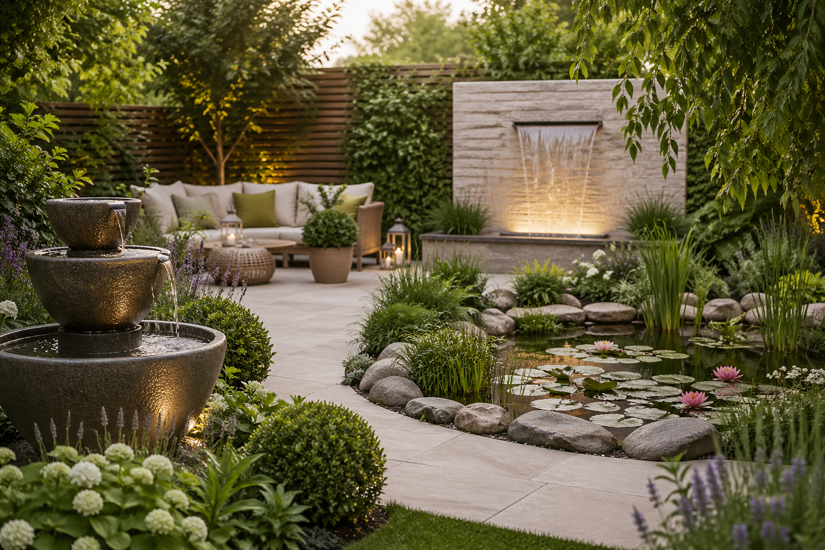
Before looking at styles or sizes, it helps to be clear on what you want your water feature to do.
For many, the primary aim is decorative. A well-placed fountain or feature piece can act as a focal point, adding visual interest and a gentle sound that softens the surrounding space. If this is your priority, exploring options within fountains and water features will give you a wide range of styles, from traditional designs to more contemporary forms.
Others may be looking for something more immersive. Ponds, for example, introduce depth, reflection and the potential for planting or wildlife. They require more planning but can transform a garden into a more natural, layered environment. If this aligns with your vision, it is worth exploring dedicated pond options and considering how they integrate with the wider landscape.
There is also a practical dimension. Some water features help mask unwanted noise from nearby roads or neighbours, while others are designed to attract wildlife or support aquatic plants. Being clear on whether your focus is aesthetic, environmental or functional will narrow your options quickly and ensure the final result feels intentional.
Water features vary widely in form and function, and each type suits a different kind of space and requirement.
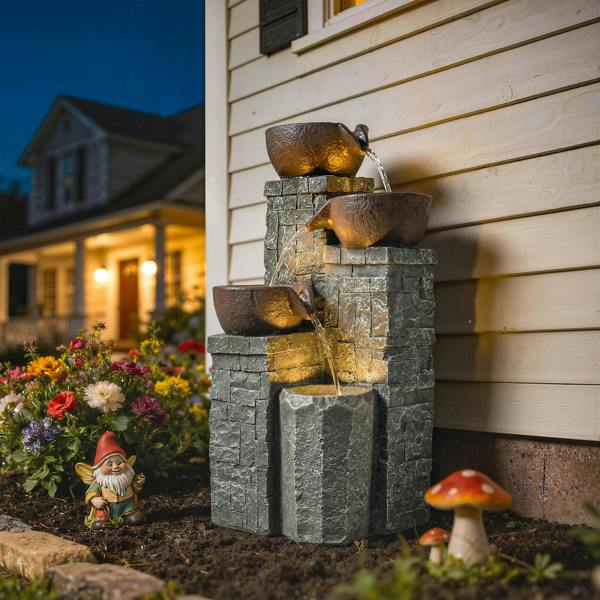
Self-contained fountains are among the most straightforward options. These typically include a built-in reservoir and pump, making them easy to install and maintain. They are well suited to patios, terraces and smaller gardens where simplicity and flexibility are important. Many designs are plug-and-play, requiring minimal setup beyond positioning and access to power.
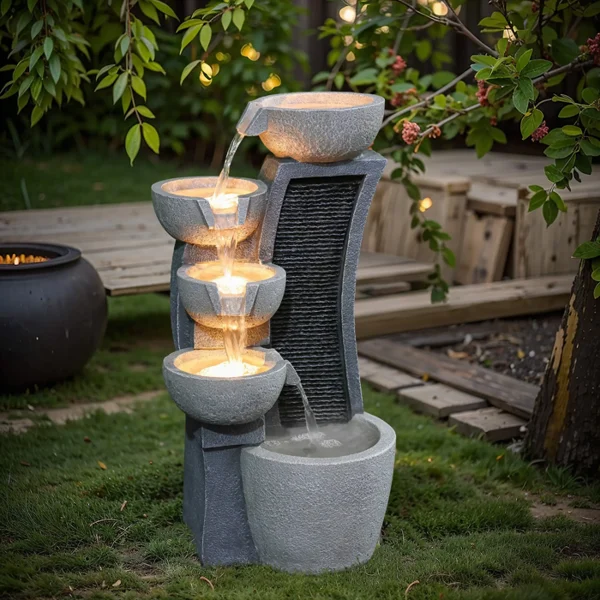
Freestanding water features offer more visual impact. These can range from sculptural designs to wall-mounted pieces and cascading structures. They often sit within the broader fountains and water features category and provide greater design variety. These are ideal when you want a statement piece without committing to a full pond installation.
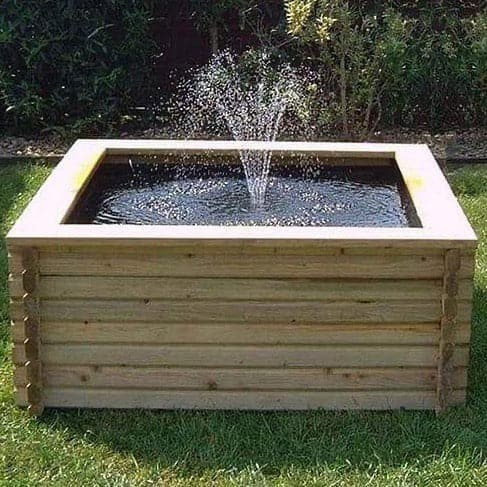
Ponds represent a more substantial addition. They can be preformed or built in situ and offer the greatest scope for customisation. A pond can support aquatic plants, fish and wildlife, creating a dynamic and evolving feature. However, this comes with added responsibility in terms of maintenance, water quality and seasonal care.
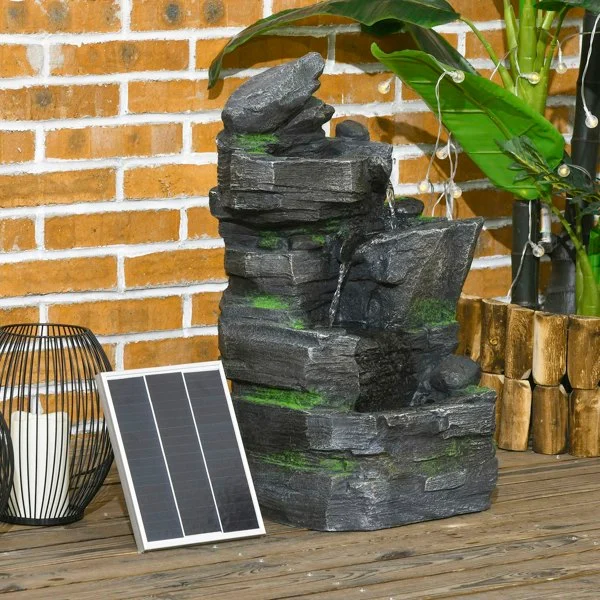
Solar-powered water features are increasingly popular for their convenience. These rely on sunlight to operate the pump, removing the need for mains power. While they are easy to position and run, performance can vary depending on weather conditions, so they are best suited to areas with consistent sunlight.
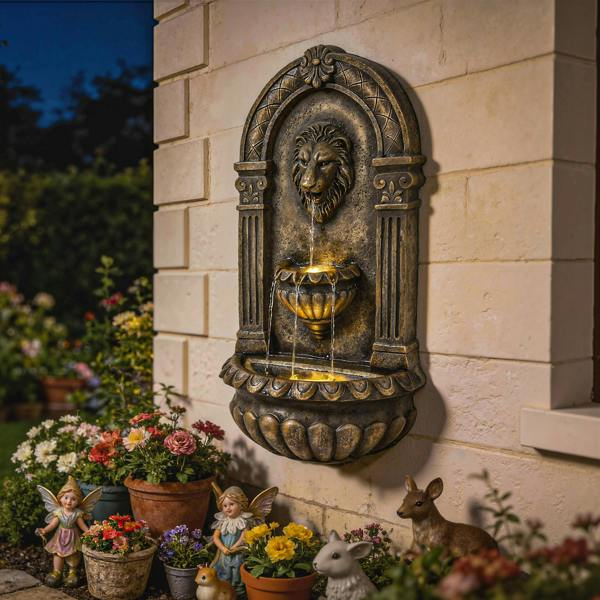
Wall fountains and water walls are another option, particularly in more structured gardens or courtyards. These maximise vertical space and can create a striking visual effect without taking up significant ground area.
Understanding these distinctions will help you match the type of feature to both your space and your expectations.
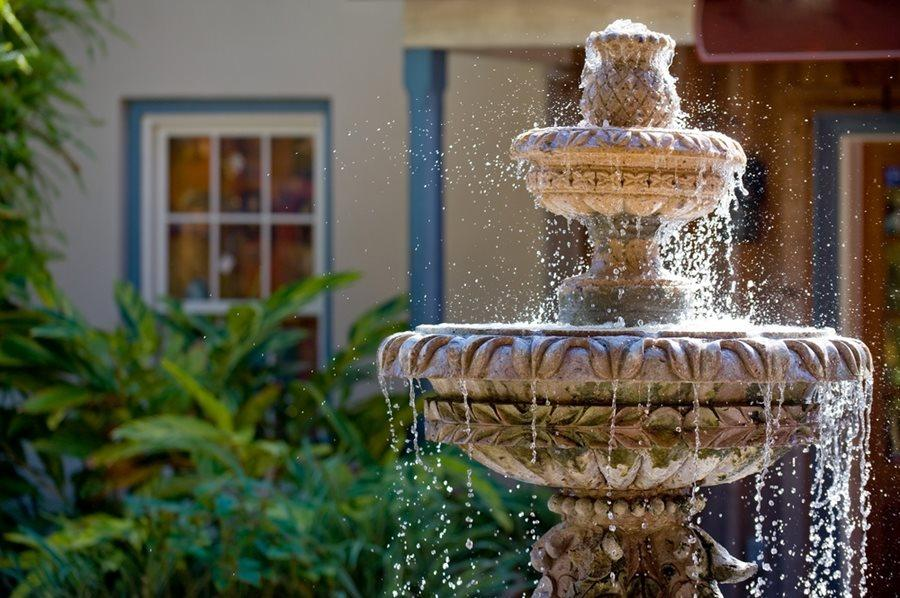
Scale and positioning are critical. A water feature should feel proportionate to its surroundings, neither dominating the space nor getting lost within it.
In smaller gardens or patios, compact self-contained features tend to work best. These can be placed near seating areas to create a focal point without overwhelming the layout. Positioning them against a wall or within a corner can help anchor the design and make efficient use of space.
Larger gardens offer more flexibility. Here, a more substantial feature such as a freestanding fountain or pond can sit centrally or form part of a wider landscaping plan. Consider sightlines from key viewpoints, such as the house, seating areas or pathways. A well-placed feature should draw the eye naturally.
Placement also affects how the feature is experienced. Positioning it close to a seating area enhances the sound of running water, while placing it further away can create a more subtle background effect. Think about how you use your garden and where the feature will have the most impact.
Sunlight and shade should not be overlooked. Excessive direct sunlight can encourage algae growth in ponds, while too much shade may limit the performance of solar-powered features. Balancing these factors will help maintain both appearance and functionality.
Access is another practical consideration. Ensure there is a convenient route for installation, maintenance and any necessary connections. This becomes particularly important for larger or more permanent features.
The materials used in a water feature influence not only its appearance but also its durability and maintenance requirements.
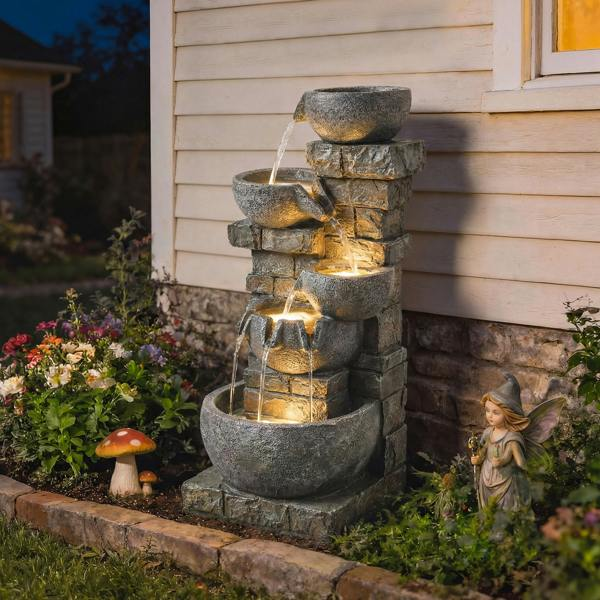
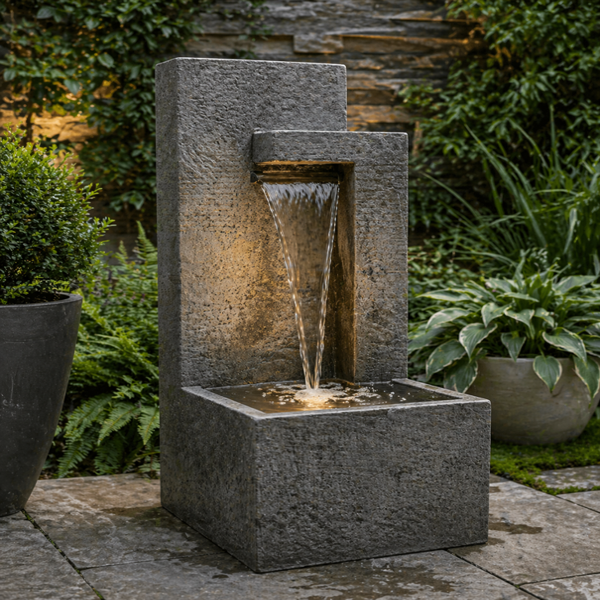
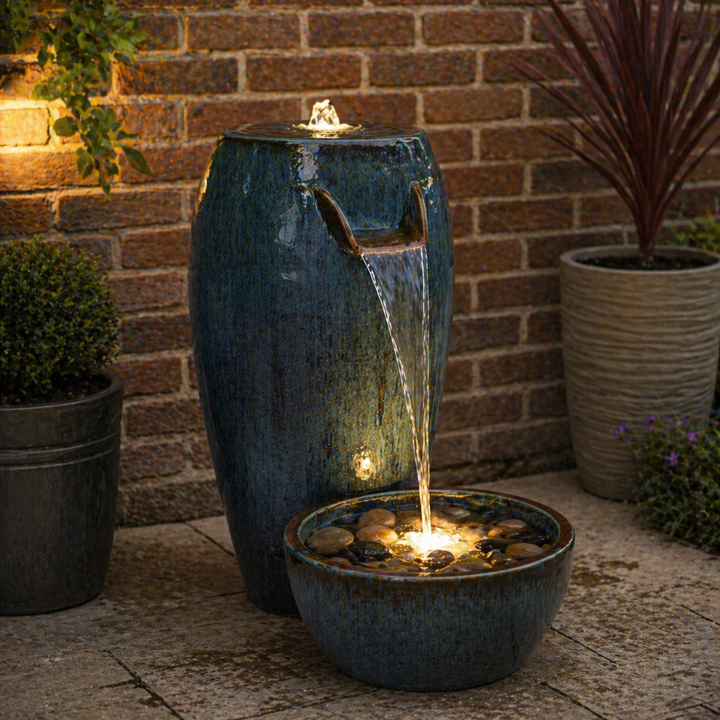
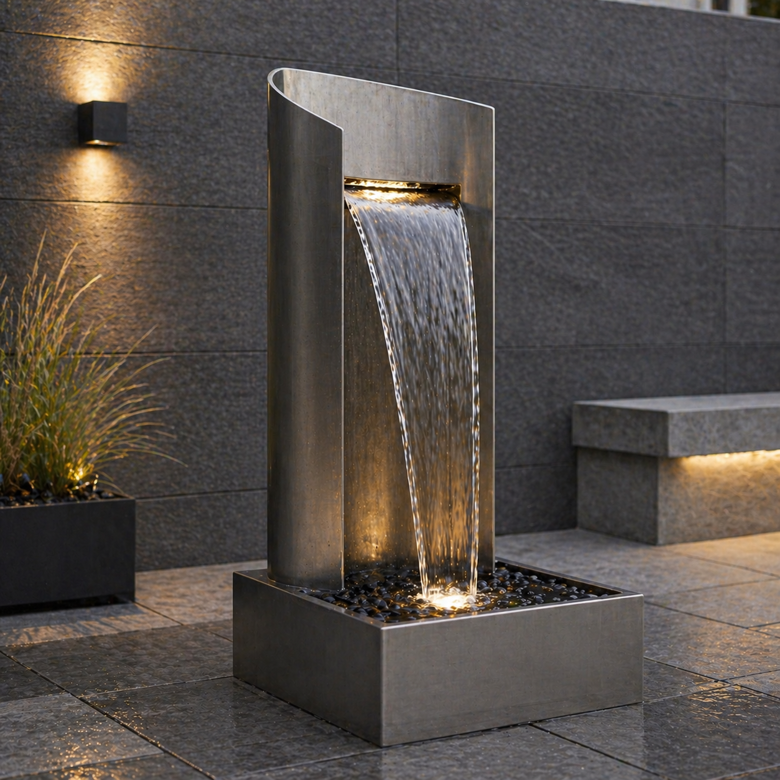
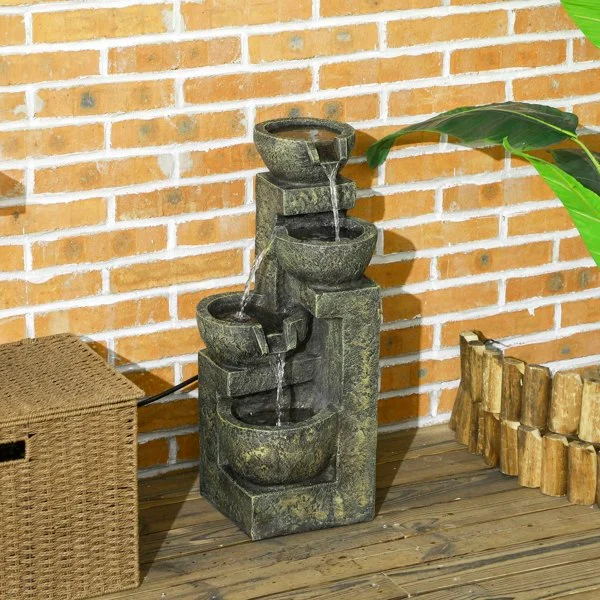
Build quality matters regardless of material. Look for well-sealed reservoirs, reliable pumps and stable construction. A feature that is easy to assemble and maintain will provide a better long-term experience.
Beyond design and materials, there are several practical factors that will influence your choice:
A water feature should complement the overall design of your garden rather than feeling like an afterthought.
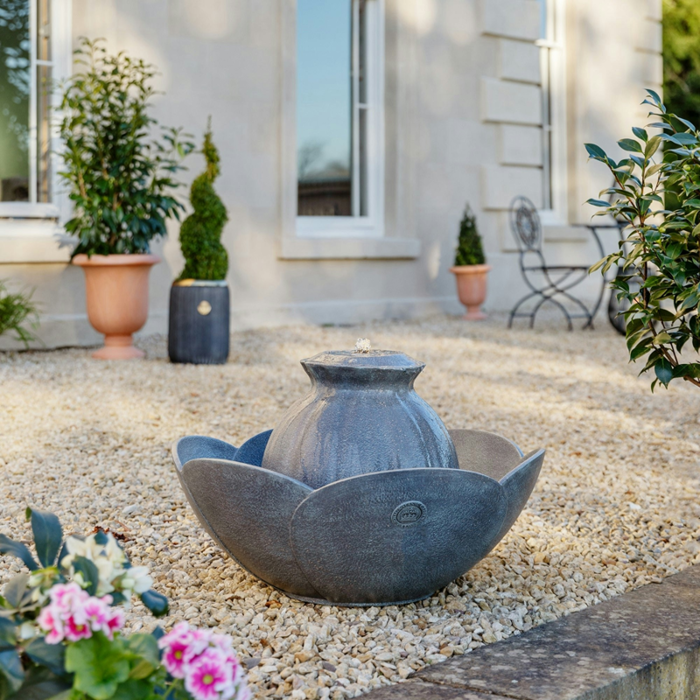
In more traditional gardens, water features often work best when they feel as though they have always been part of the landscape. Classic tiered fountains, carved bowls, urn-style features and stone-effect designs can complement established planting schemes, mature borders and more formal layouts. Materials with a weathered or natural appearance, such as stone, cast stone or textured resin, tend to sit comfortably alongside lawns, gravel paths and cottage garden planting.
Traditional designs often create a sense of heritage and permanence, making them particularly effective in gardens with brickwork, established trees, climbing plants or period architecture. If your outdoor space already has softer planting, curved borders or ornamental features, a more classic water feature can help tie everything together naturally.
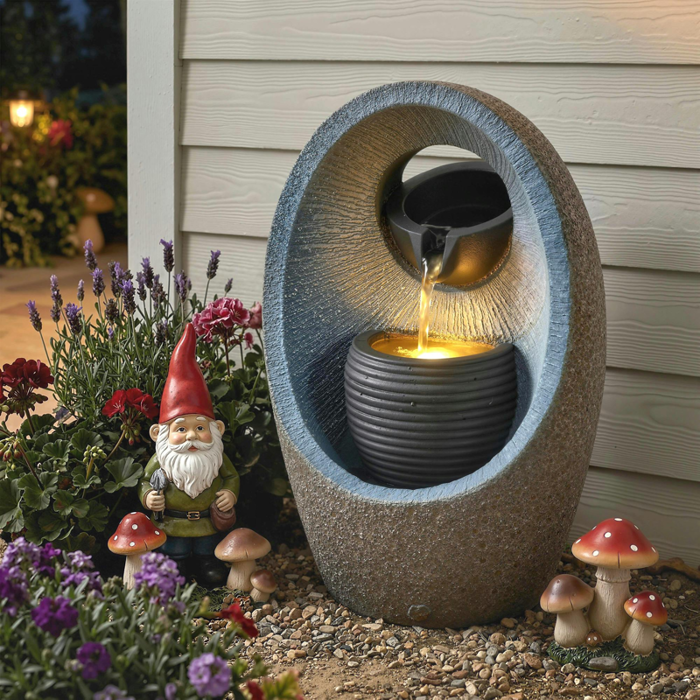
For modern or minimalist gardens, cleaner lines and more structured shapes usually create a stronger visual result. Water features made from smooth resin, polished stone, stainless steel or darker composite materials can complement patios, decking and architectural planting schemes.
Geometric designs, column features, sphere fountains and wall-mounted styles often work especially well in contemporary settings, where simplicity and balance are key. These styles can add movement and sound without overwhelming the space. If your garden includes porcelain paving, raised beds, slatted screening or monochrome planting, a sleek water feature can reinforce that modern aesthetic.
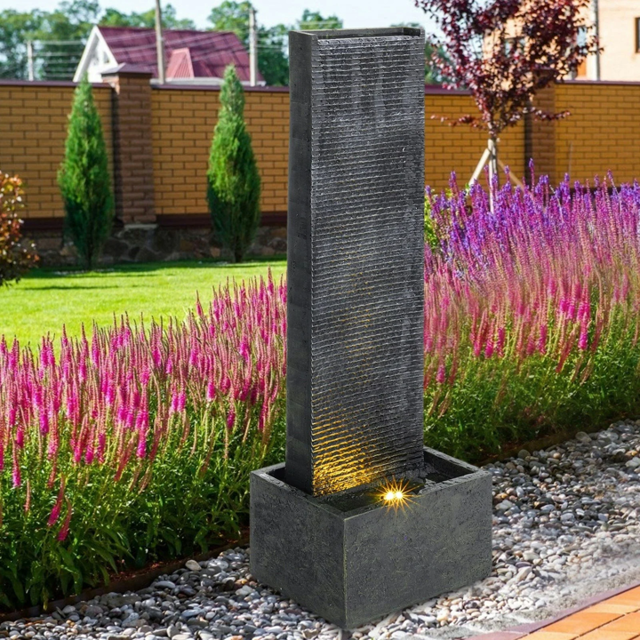
A water feature should feel connected to the rest of the garden rather than placed in isolation. Think about how it will sit alongside outdoor furniture, planting beds, pathways, fences and other focal points. The goal is to create a natural flow, where the feature enhances the space rather than competing for attention.
Colour plays an important role here. Natural stone tones may blend better in softer landscapes, while darker finishes or metallic accents can work well in contemporary spaces. Texture also matters, with rougher surfaces creating a more organic feel and smoother finishes often appearing more refined.
Scale is equally important. A feature that is too small may get lost in a large open garden, while an oversized design can dominate a smaller patio or courtyard. Choosing the right proportions helps the feature feel intentional and balanced.
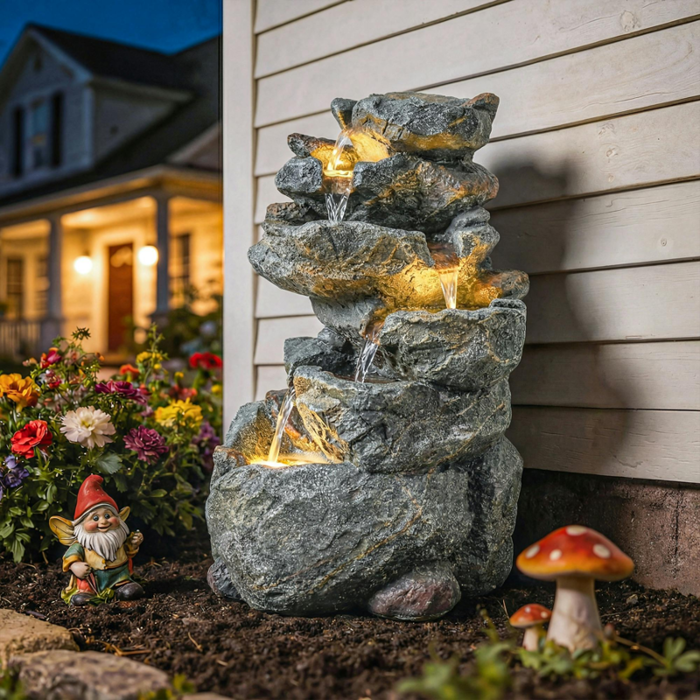
Lighting can completely change how a water feature feels, particularly in the evening. Many designs include integrated LED lighting, which can highlight moving water, create reflections and add atmosphere after sunset.
In smaller gardens or patio areas, subtle lighting can create a calm, relaxing focal point for outdoor dining or evening entertaining. In larger spaces, illuminated features can help define key areas of the garden and draw attention to planting or landscaping features nearby.
If your chosen feature does not include built-in lighting, consider how surrounding garden lighting, such as uplighters, pathway lights or soft ambient lighting, could still help enhance its presence after dark.
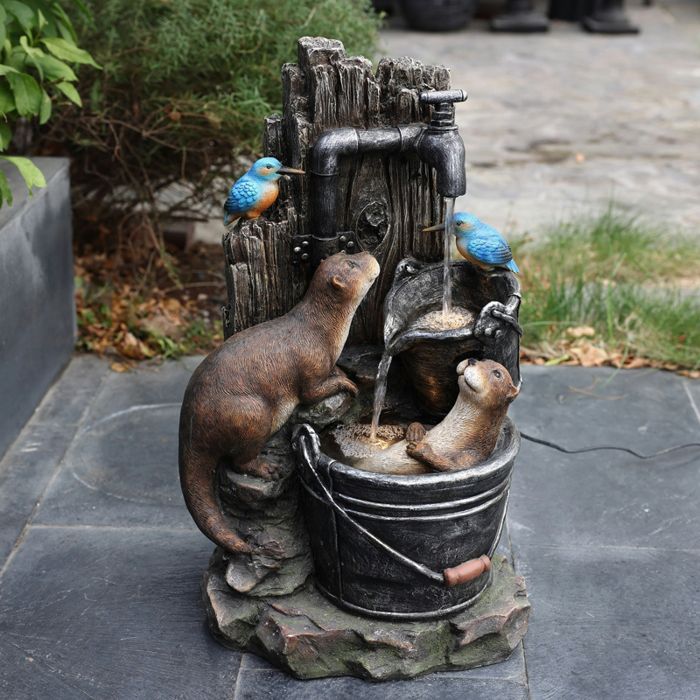
The best water features do more than simply look attractive. They help shape how the garden feels. A softly bubbling stone fountain may create a calm, restorative atmosphere, ideal for quiet corners or spaces designed for relaxation. A larger cascading feature, on the other hand, can make more of a statement and bring energy, movement and sound into the garden.
Before choosing a design, think about how you plan to use the space. Whether you want a peaceful retreat, an elegant entertaining area or a bold architectural focal point, the right water feature should support that overall vision and feel like a natural extension of your garden design.
No. Many features are mains-powered for consistent operation, but solar-powered options are available and can be suitable for smaller or sunnier spaces.
Most require regular topping up of water and occasional cleaning of the pump. Ponds require more attention, particularly if they include plants or fish.
Smaller, self-contained features are usually straightforward to install. Larger features and ponds may require more preparation and, in some cases, professional assistance.
Ponds and natural-style features are more likely to attract wildlife such as birds and insects. Decorative fountains are less likely to do so but can still contribute to a welcoming environment.
Some features can remain in place, but it is often advisable to drain or protect them during freezing conditions to prevent damage.
They can be effective in consistent sunlight but may not operate continuously in shaded areas or during overcast weather.
Consider the scale of your space and how prominent you want the feature to be. It should feel balanced within the overall layout.
Yes. The sound of running water can help mask background noise, making them a practical as well as decorative addition.
© 2026 Rackhams Retail Limited


Pay securely with:


Terms & Conditions Cookie Settings Privacy Policy