

 0
0

 Free Delivery on all orders!
 The Rackhams Guarantee
How to protect and care for garden furniture (covers, storage & seasonal care)
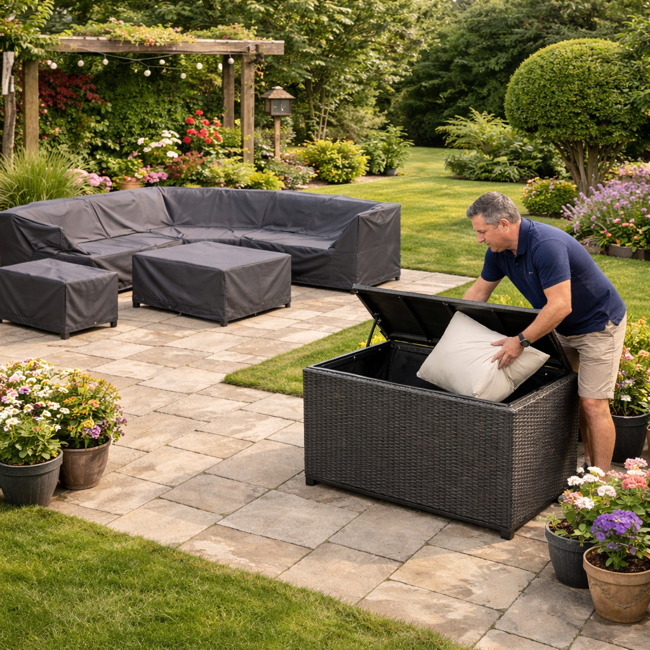
Garden furniture is designed to be enjoyed outdoors, but even the best-made sets benefit from a little care. Sun, rain, damp air, pollen and everyday use all take their toll over time, which means a few simple habits can make a big difference to how your furniture looks and lasts.
Whether you’ve invested in a compact bistro set or a full outdoor lounge and dining area, looking after it properly helps preserve comfort, appearance and value. Using garden furniture covers, storing cushions and making small seasonal adjustments can keep everything in great condition and ready to use whenever the weather allows.
This guide walks you through the most effective ways to protect your garden furniture, from choosing the right covers and storage solutions to understanding how different materials respond to the elements, so you can enjoy your outdoor space season after season.
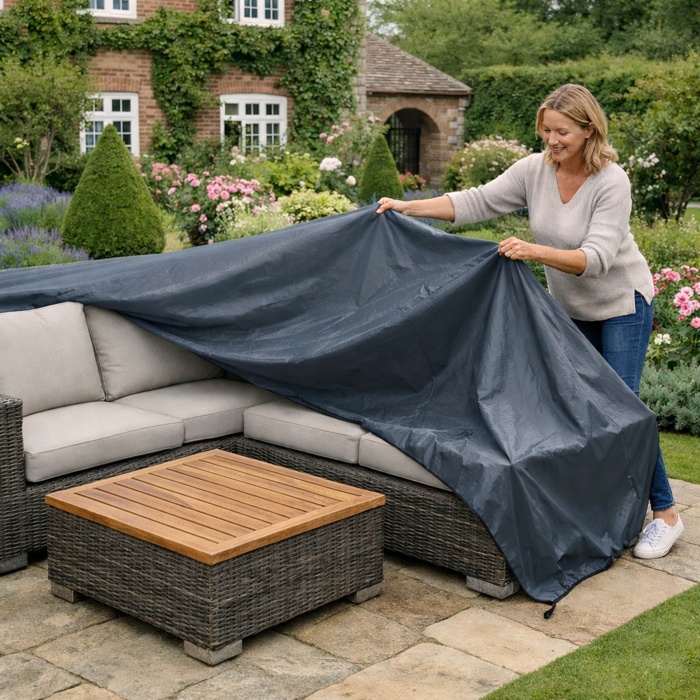
Why protecting your garden furniture matters
Garden furniture is designed for outdoor living, but even the most well-made sets benefit from a little care and protection.
In the UK, furniture is exposed not just to sunshine, but also rain, damp air, frost, pollen and airborne dirt throughout the year. Over time, these elements can gradually fade fabrics, mark surfaces and reduce the life of even high-quality pieces.
Protecting your garden furniture isn’t about wrapping it up or hiding it away, it’s about keeping it in the condition you enjoyed on day one. Cushions stay brighter, frames stay cleaner and materials last longer when they’re shielded from unnecessary wear.
A few simple habits, like using covers or storing soft furnishings when they’re not in use, can make a noticeable difference to how your furniture looks and feels from one season to the next.
It also makes practical sense, as outdoor furniture is an investment in your home and how you enjoy your garden. Taking care of it means fewer replacements, less maintenance and more time spent enjoying your outdoor space instead of cleaning or repairing it.
Whether you have a compact bistro set or a full lounge and dining setup, the right protection helps you get the very best value from your furniture year after year.
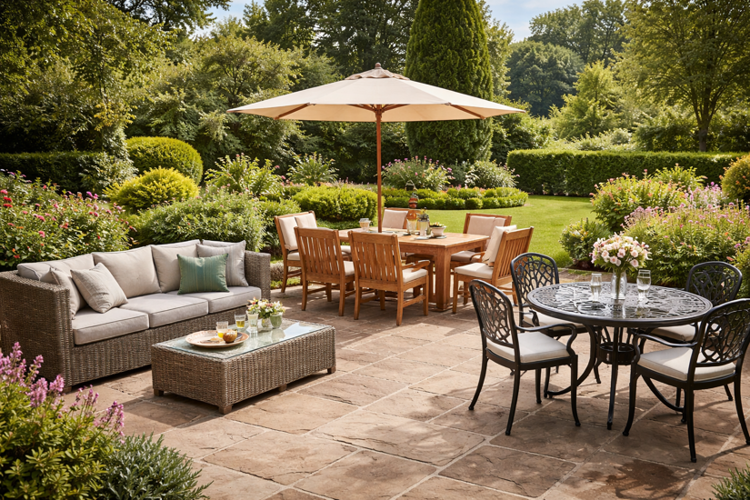
Understanding what you need to protect
Not all garden furniture is affected by the elements in the same way. Different materials respond differently to moisture, sunlight, temperature changes and everyday use, which is why understanding what your furniture is made from helps you protect it more effectively.
Rattan and woven furniture is designed for outdoor use, but prolonged exposure to rain and damp conditions can lead to dirt build-up and gradual fading. While synthetic rattan is highly durable, keeping it clean and dry between uses helps it retain its appearance for longer. Cushions are usually the most vulnerable part of rattan sets, as fabric and padding can absorb moisture if left outside.
Metal furniture, particularly aluminium, is naturally resistant to rust, but it can still suffer from water marks, dirt, and surface wear over time. Powder-coated finishes protect the metal underneath, and keeping furniture covered or wiped down helps prevent grime from building up in joints and corners.
Wooden furniture needs the most consideration. Timber is a natural material that reacts to moisture and sunlight, which can cause it to dry out, change colour, or develop surface marks if left unprotected. While many hardwoods are suitable for outdoor use, storing or covering wooden furniture when it’s not in use helps maintain its finish and prolong its lifespan.
Plastic and resin furniture is often chosen for its easy-care nature, but even these materials benefit from basic protection. Sunlight can fade colours over time, and dirt or water left on the surface can lead to staining or dullness if not cleaned away.
Across all furniture types, cushions and soft furnishings are usually the most sensitive to weather. Moisture, condensation and lack of airflow can lead to dampness or mildew if they are left exposed, which is why storing or covering cushions separately is one of the most important parts of caring for your outdoor furniture.
Understanding these differences makes it easier to choose the right protection for your set and helps ensure every part of it stays looking and feeling its best.
Choosing the right garden furniture covers
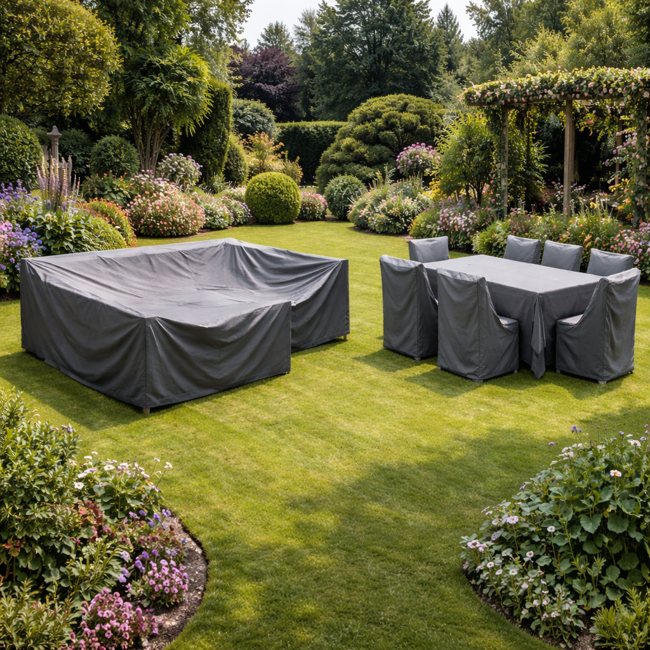
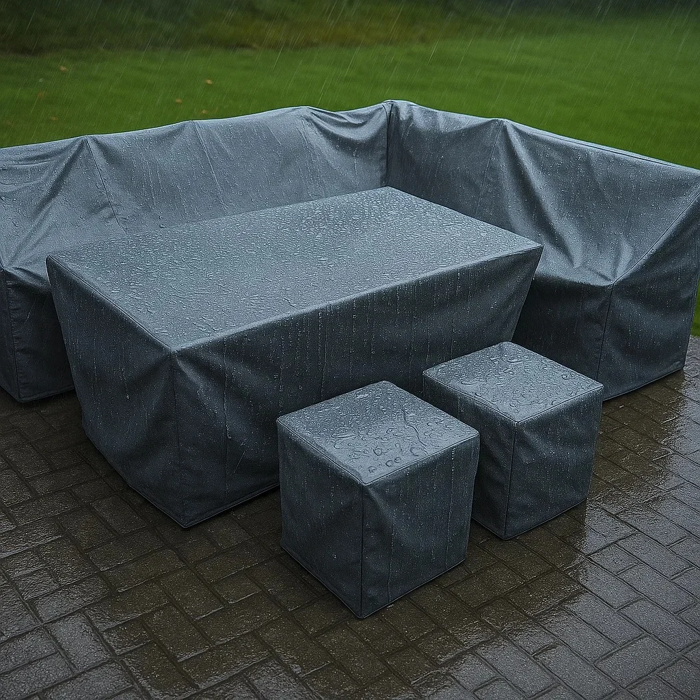
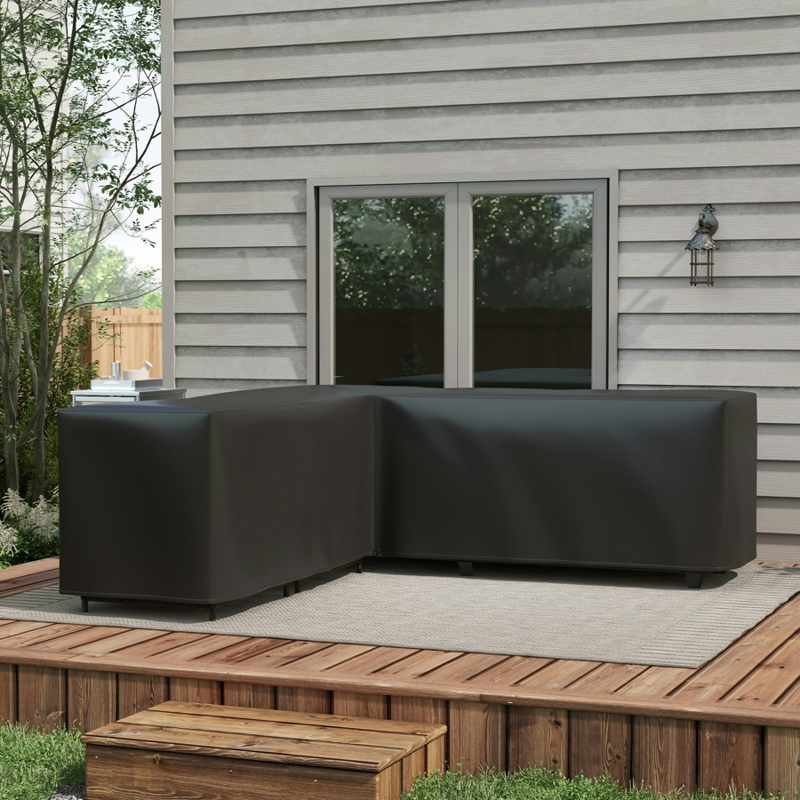
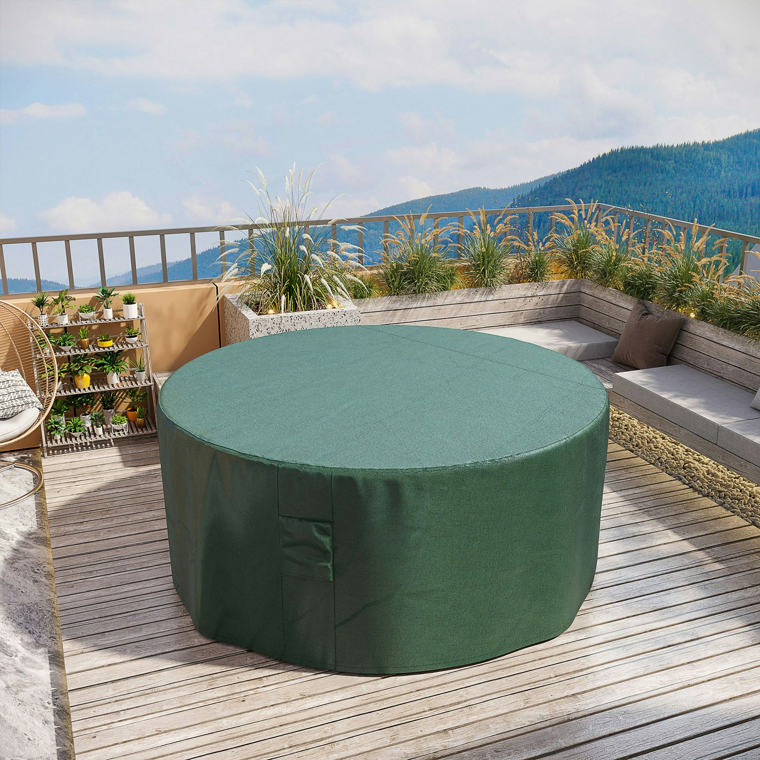
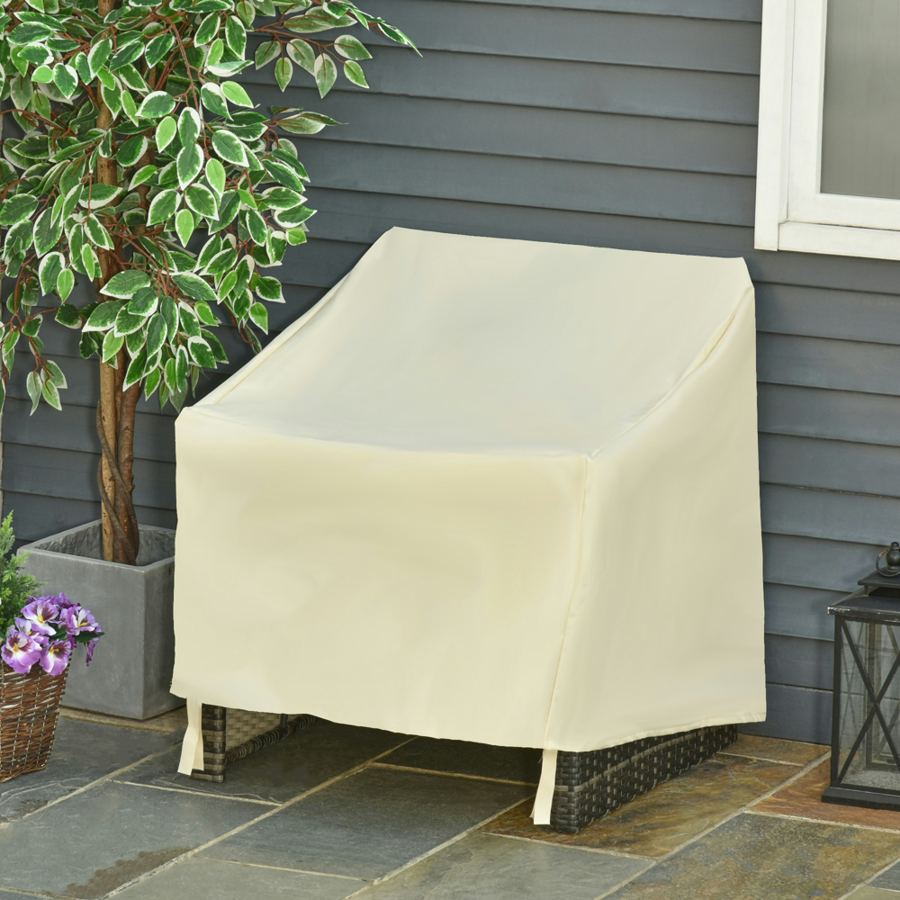
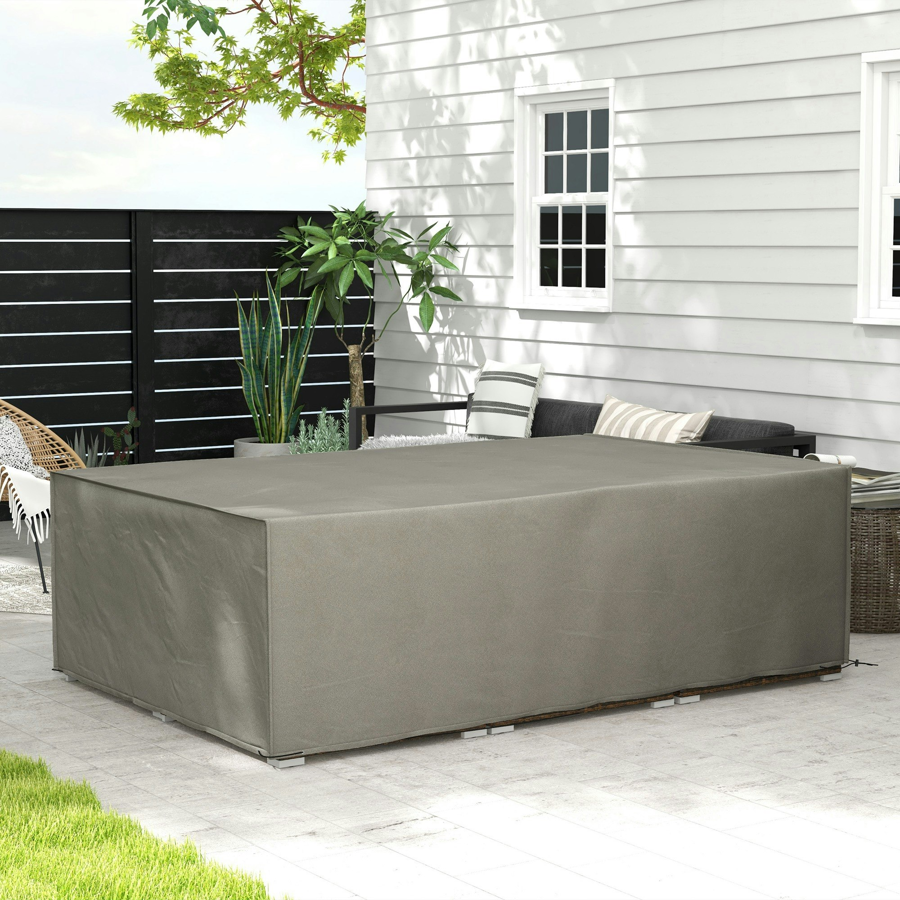
Using a garden furniture cover is one of the simplest and most effective ways to protect your outdoor furniture. Covers help shield surfaces and cushions from rain, bird droppings, pollen, tree sap, and everyday dirt, while also reducing how much moisture and debris settles on your furniture between uses.
One of the first decisions is whether to use a single large cover or individual covers for each piece. Large covers can be convenient for compact sets, but in larger layouts they can trap air, collect rainwater, or lift in windy weather. Individual covers, on the other hand, tend to sit more securely and allow you to protect key items, such as sofas and tables without creating heavy, awkward bundles.
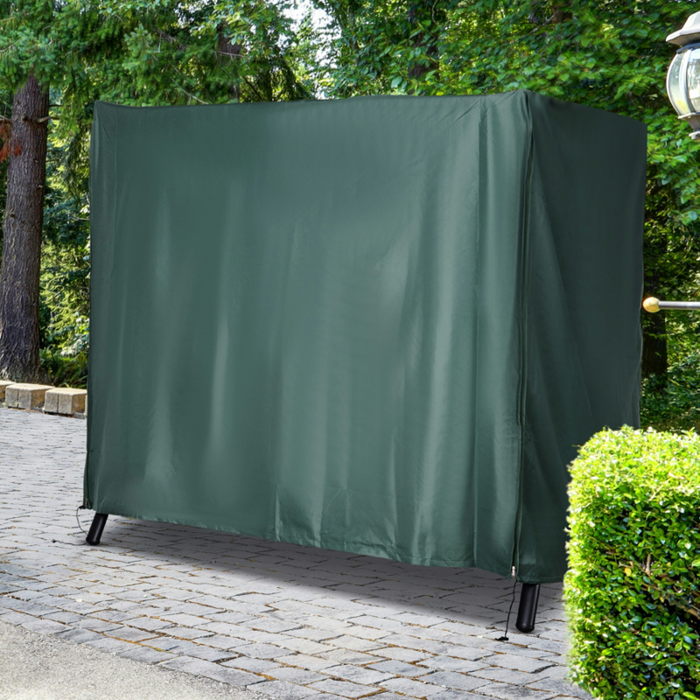
Some furniture shapes also benefit from purpose-designed covers. Items such as egg chairs, swing seats, hanging chairs, and deep lounge sofas often don’t suit standard rectangular covers, as loose fabric can flap in the wind or allow rain to collect in folds. Covers made specifically for these shapes fit more closely, helping protect cushions and frames without excess material pooling or lifting.
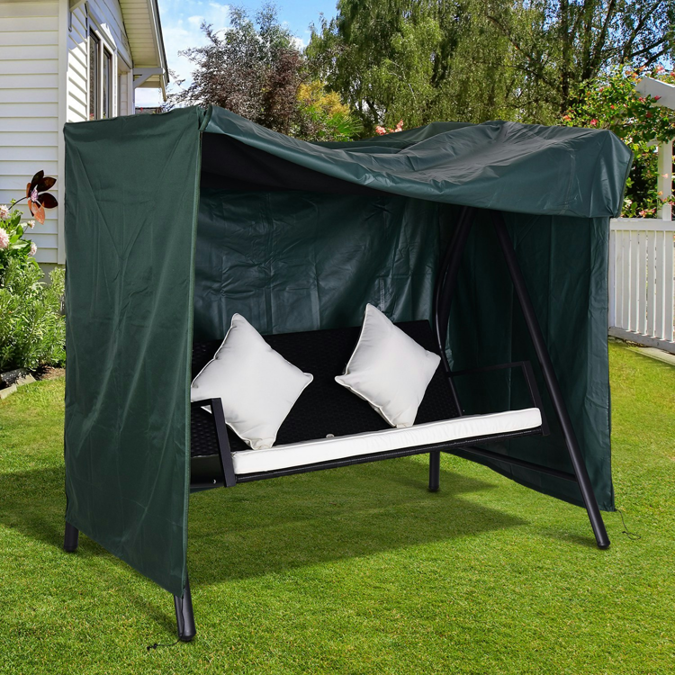
If you own statement pieces or hanging seating, using the right shape of cover makes them easier to protect and keeps them looking their best for longer.
Breathability is just as important as waterproofing. A good outdoor cover should keep rain out while still allowing air to circulate. This helps prevent condensation forming underneath, which can otherwise lead to dampness, mildew, or marks on cushions and frames.
Secure fastenings and a close fit also help keep covers in place during windy conditions and stop water pooling on flat surfaces.
Covers aren’t just for winter. Using them overnight, during wet spells, or when furniture won’t be used for a few days helps keep everything clean and ready to enjoy, saving time on wiping down or drying cushions before you sit down.
Storing cushions and soft furnishings properly
Cushions, throws and padded seat covers are usually the most vulnerable part of any garden furniture set. Even when outdoor fabrics are designed to be shower-resistant, regular exposure to damp air, condensation and prolonged moisture can lead to unpleasant smells, mildew, or a loss of shape and comfort over time.
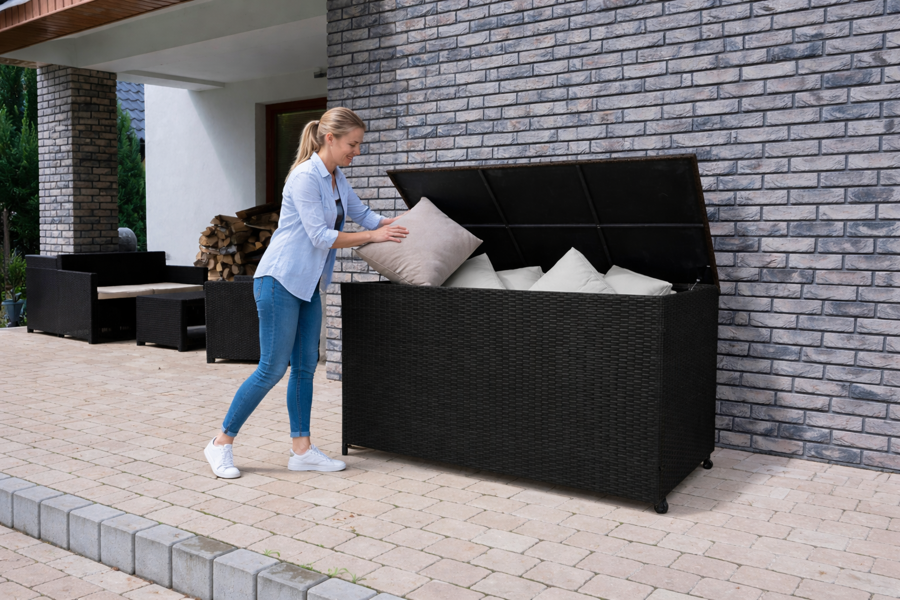
The simplest way to protect soft furnishings is to store them somewhere dry whenever they are not in use for extended periods. This could be a dedicated garden storage box, a weatherproof cushion chest, a shed, or even an indoor utility space during the wettest months. Keeping cushions off the ground and allowing air to circulate around them helps prevent moisture becoming trapped inside the fabric and padding.
If you prefer to leave cushions outside during the warmer months, using a breathable cover over the furniture set adds an extra layer of protection against overnight dew and sudden showers. Many people find that combining light-use covers with regular indoor or box storage gives the best balance between convenience and care.
Before storing cushions away, it’s always worth ensuring they are fully dry. Folding or packing damp cushions into an enclosed space can lead to mould developing surprisingly quickly. A quick check after rain or allowing cushions to air dry on a sunny day helps keep them fresh and ready to use.
Expert tip: Consider storage boxes which allow airflow
Storage boxes that allow a little airflow are often better than completely sealed containers, as they reduce the chance of trapped moisture building up inside.
Seasonal care and when to store furniture away
Garden furniture is designed to live outdoors, but how you look after it through the seasons has a big impact on how long it lasts and how good it continues to look. UK weather brings everything from strong sun to heavy rain, frost, and long periods of damp, so adapting your care routine through the year is one of the most effective ways to protect your investment.
During spring and summer, regular light maintenance makes all the difference. Wiping down surfaces, shaking out cushions, and using covers overnight or during wet spells helps prevent dirt and moisture from building up. This keeps furniture clean, comfortable, and ready to use whenever the weather turns good.
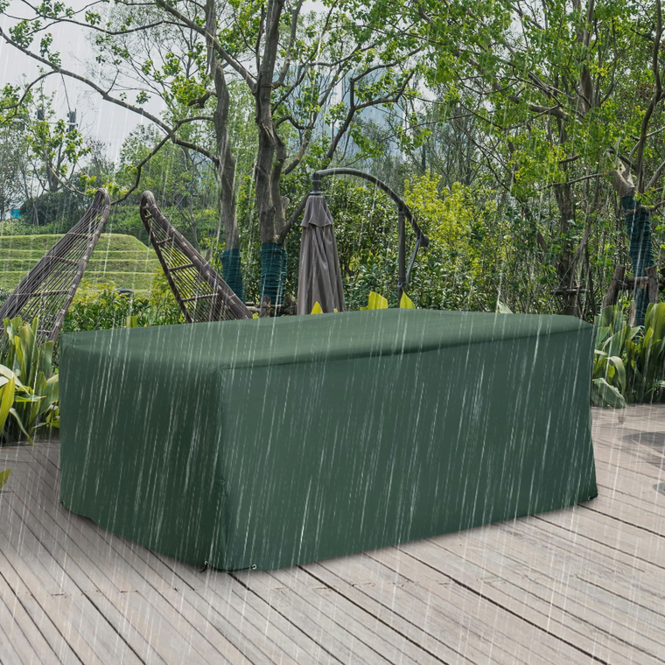
As autumn approaches and the weather becomes less predictable, it’s a good time to start using covers more consistently and storing cushions indoors or in a dry storage box. Leaves, falling debris, and prolonged damp can stain surfaces and encourage mould on fabrics if left untreated.
Over winter, most people choose to either store furniture in a shed, garage, or sheltered area, or keep it protected outdoors with well-fitted, breathable covers. Hard surfaces such as metal, rattan, and plastic generally cope well with cold temperatures, but protecting them from constant moisture and frost helps preserve finishes and reduce wear. Wooden furniture benefits especially from being kept dry or covered, as prolonged damp can affect the grain and surface treatment.
Taking a few moments at the end of each season to clean, dry, and protect your furniture makes spring setup quicker and keeps everything looking and feeling its best year after year.
Expert tip: Remove cushions from underneath covers during autumn and winter
Even when using waterproof furniture covers, it’s best to remove and store cushions separately during autumn and winter. Covers protect furniture from rain, but trapped moisture and condensation can still build up underneath, which may lead to dampness, mildew, or fabric damage if cushions are left in place for long periods.
When storing furniture or cushions away for winter, a quick clean before putting them away helps prevent dirt or stains from becoming permanent over time.

Using shade and shelter to reduce wear and tear
Sunlight is one of the biggest contributors to fading, drying, and surface wear on garden furniture. While outdoor materials are designed to withstand UV exposure, constant direct sunlight can gradually lighten fabrics, dry out wood, and dull finishes over time. Adding shade to your outdoor seating area helps protect both furniture and cushions while also making the space more comfortable to use on warm days.
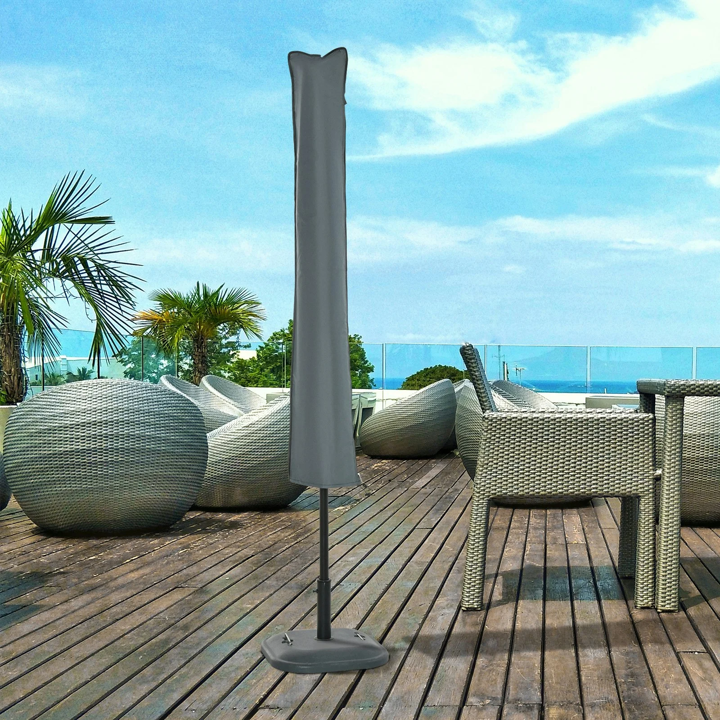
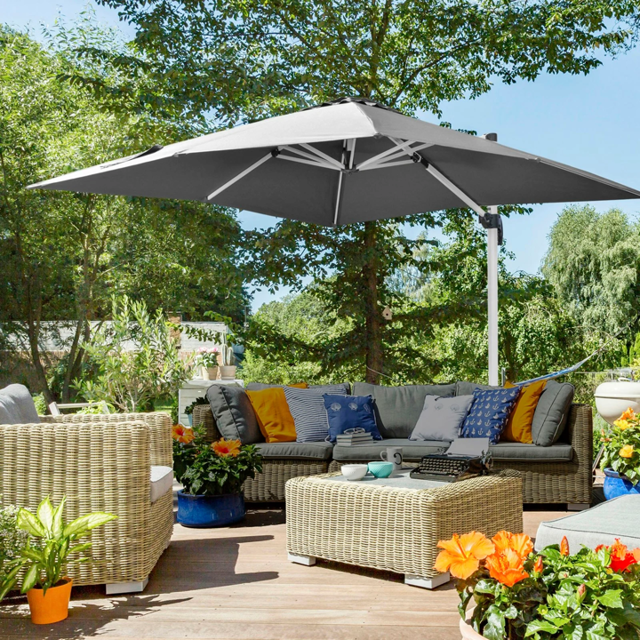
Parasols are one of the simplest ways to provide flexible shade. They can be positioned over dining tables or seating areas to shield furniture from strong midday sun and reduce heat build-up on cushions and tabletops. Adjustable or cantilever parasols are particularly useful, as they allow you to follow the sun throughout the day without having to move your furniture.
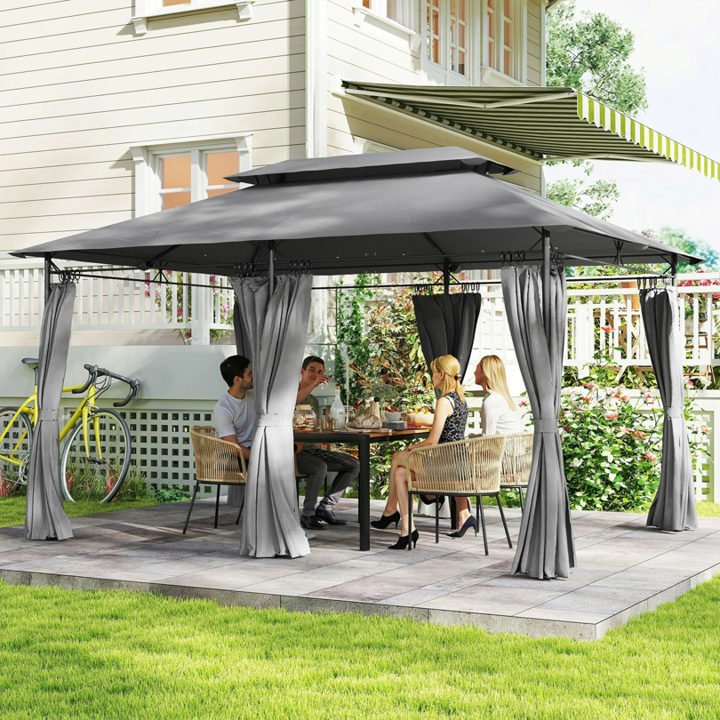
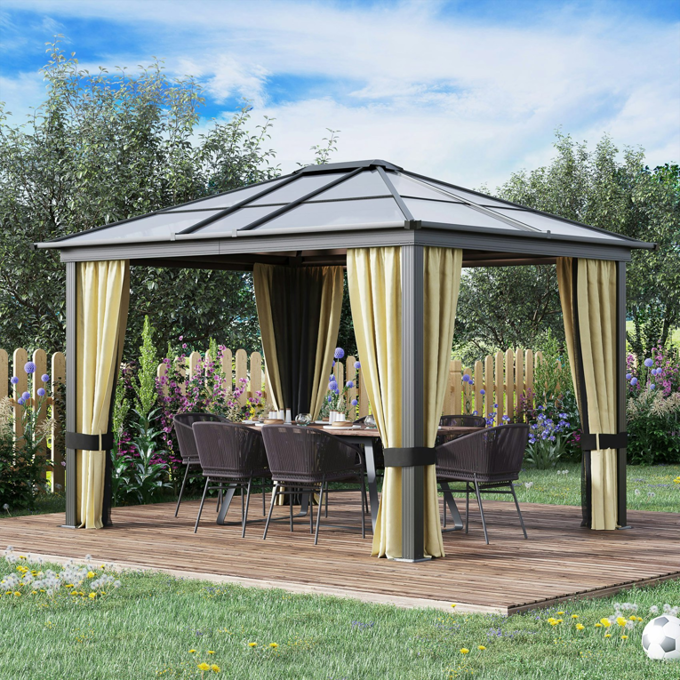
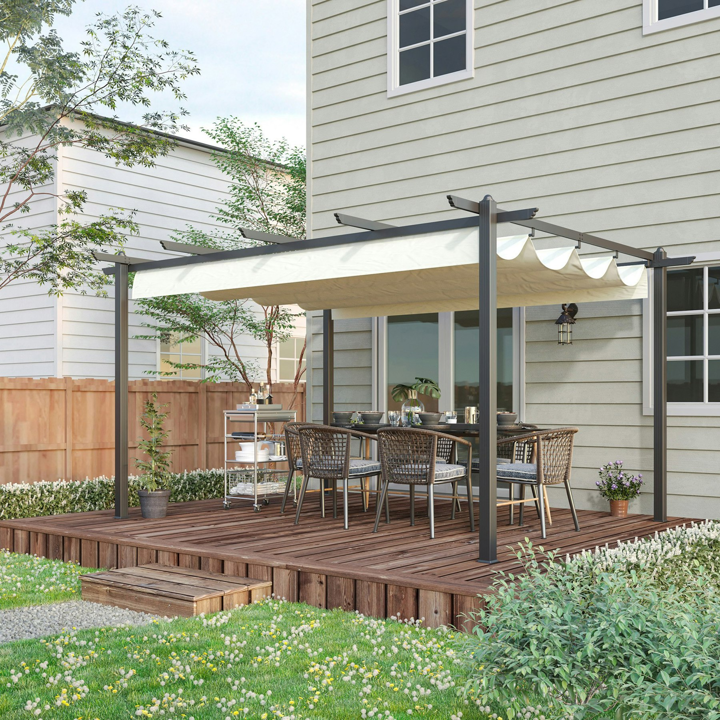
For more permanent or wider coverage, gazebos, pergolas, and canopies offer excellent protection. These structures not only provide shade but also help shelter furniture from light rain, falling debris, and pollen.
Placing seating areas under a pergola or canopy can significantly reduce how much cleaning and covering is needed, especially during the warmer months when furniture is in constant use.
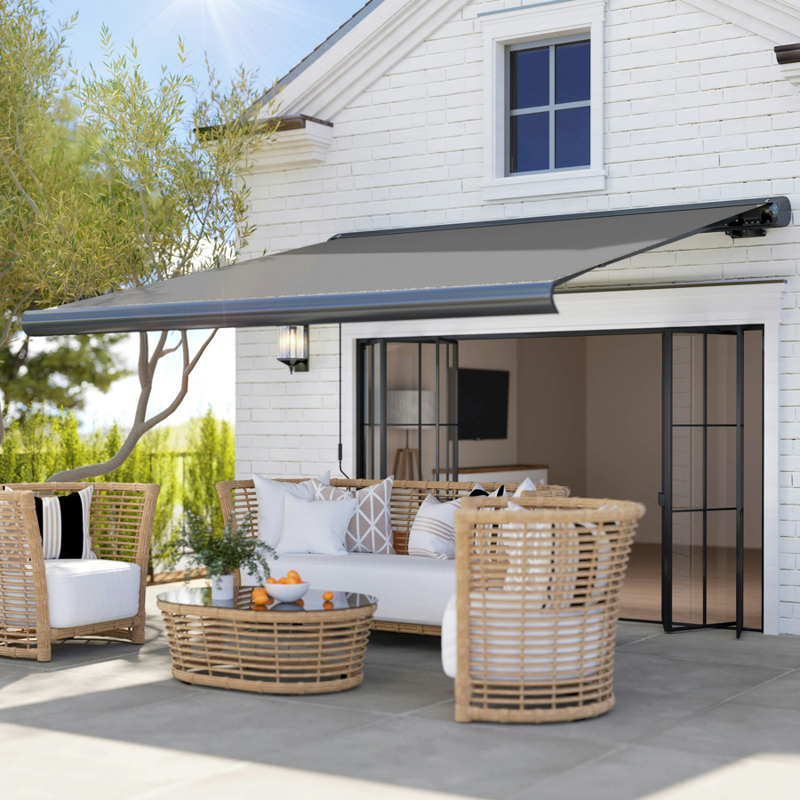
Awnings and wall-mounted shade systems are another option for patios and decking areas close to the house. They create a shaded zone that keeps furniture cooler, protects cushions, and allows you to enjoy outdoor seating for longer throughout the day.
Using shade doesn’t just extend the life of your furniture it also makes your outdoor space more inviting, encouraging you to relax and entertain in comfort, whatever the weather.
Expert tip: Shade the seating, not just the table
When positioning parasols, pergolas, or canopies, focus on keeping seating and cushions in the shade rather than just the tabletop. Fabrics fade and age more quickly than frames, and prolonged sun exposure can dry out padding and dull colours.
By protecting the areas people sit on most, you help preserve both comfort and appearance for longer.
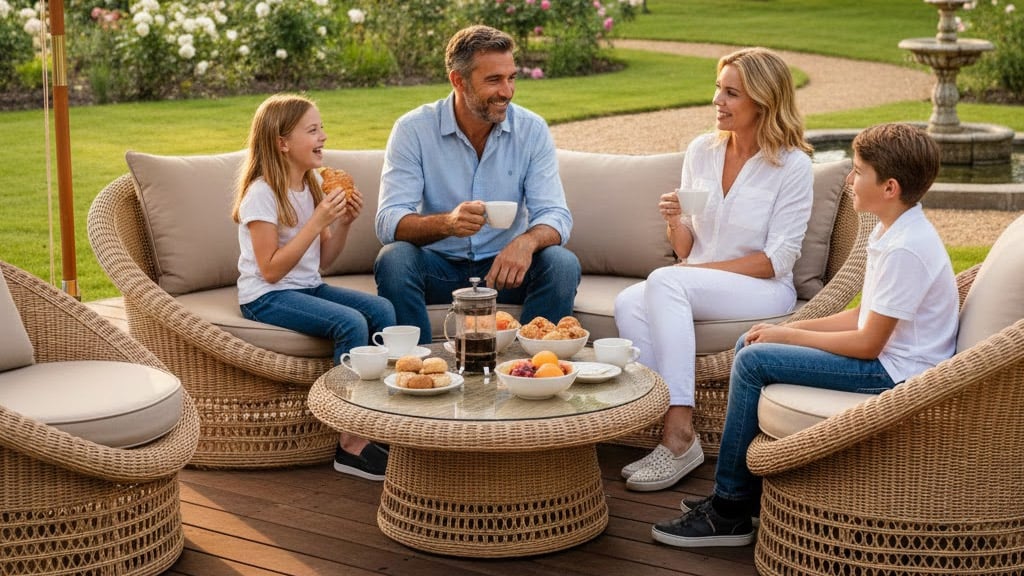
Shading options for you and your garden furniture
Final checklist: keeping your garden furniture in great condition
Before settling into your outdoor space for the season, it’s worth running through a few simple checks. These small habits help protect your furniture, extend its lifespan, and keep everything looking and feeling as good as it should.
Have you protected it from the elements? Make sure you have suitable covers for your main seating and tables, and that they fit securely without trapping excess moisture. Use covers during wet spells, overnight, and when furniture won’t be used for a few days.
Are cushions stored properly? Check that cushions and soft furnishings are kept dry, either inside a storage box, shed, or indoors when the weather turns damp. Even waterproof covers should not be relied on for long-term cushion storage.
Is shade positioned where it matters most? Parasols, pergolas, and canopies should be placed to protect seating and cushions from strong sun, helping prevent fading and heat build-up.
Is everything clean and dry before storing or covering? A quick wipe-down and allowing furniture to dry before covering or storing it helps prevent stains, mould, and surface damage over time.
Have you adapted care for the season? As autumn and winter approach, increase use of covers, remove cushions, and consider moving furniture into sheltered storage if possible.
By following these simple steps, your garden furniture will stay more comfortable, more attractive, and ready to enjoy whenever the weather allows.
Frequently asked questions about protecting garden furniture
Do I need to cover my garden furniture in summer?
Yes, it’s still a good idea to use covers during summer when furniture isn’t in use overnight or during wet spells. Covers help protect against sudden rain, pollen, bird droppings, and fading caused by strong sunlight, keeping your furniture cleaner and ready to use.
Can I leave cushions outside under furniture covers?
It’s best not to. Even waterproof covers can trap moisture underneath, especially overnight or in cooler weather. Cushions should be stored separately in a dry storage box, shed, or indoors to prevent damp, mildew, and fabric damage.
Are garden furniture covers waterproof or breathable?
Good quality covers are both. They are designed to keep rain out while allowing air to circulate, which helps prevent condensation building up underneath. Breathable covers are important for keeping furniture and cushions dry and fresh.
What’s the best way to store garden furniture in winter?
Ideally, furniture should be cleaned, dried, and stored in a shed, garage, or sheltered area. If that’s not possible, using well-fitted, breathable covers outdoors helps protect furniture from moisture, frost, and debris throughout the colder months.
Will sunlight damage outdoor furniture?
Over time, yes. UV rays can fade fabrics, dry out wooden surfaces, and dull finishes. Using parasols, pergolas, or canopies to provide shade helps protect furniture and cushions while making your outdoor space more comfortable to use.
© 2026 Rackhams Retail Limited
Follow us


Pay securely with:


Terms & Conditions Cookie Settings Privacy Policy